The Case for Helping Your Neighbors
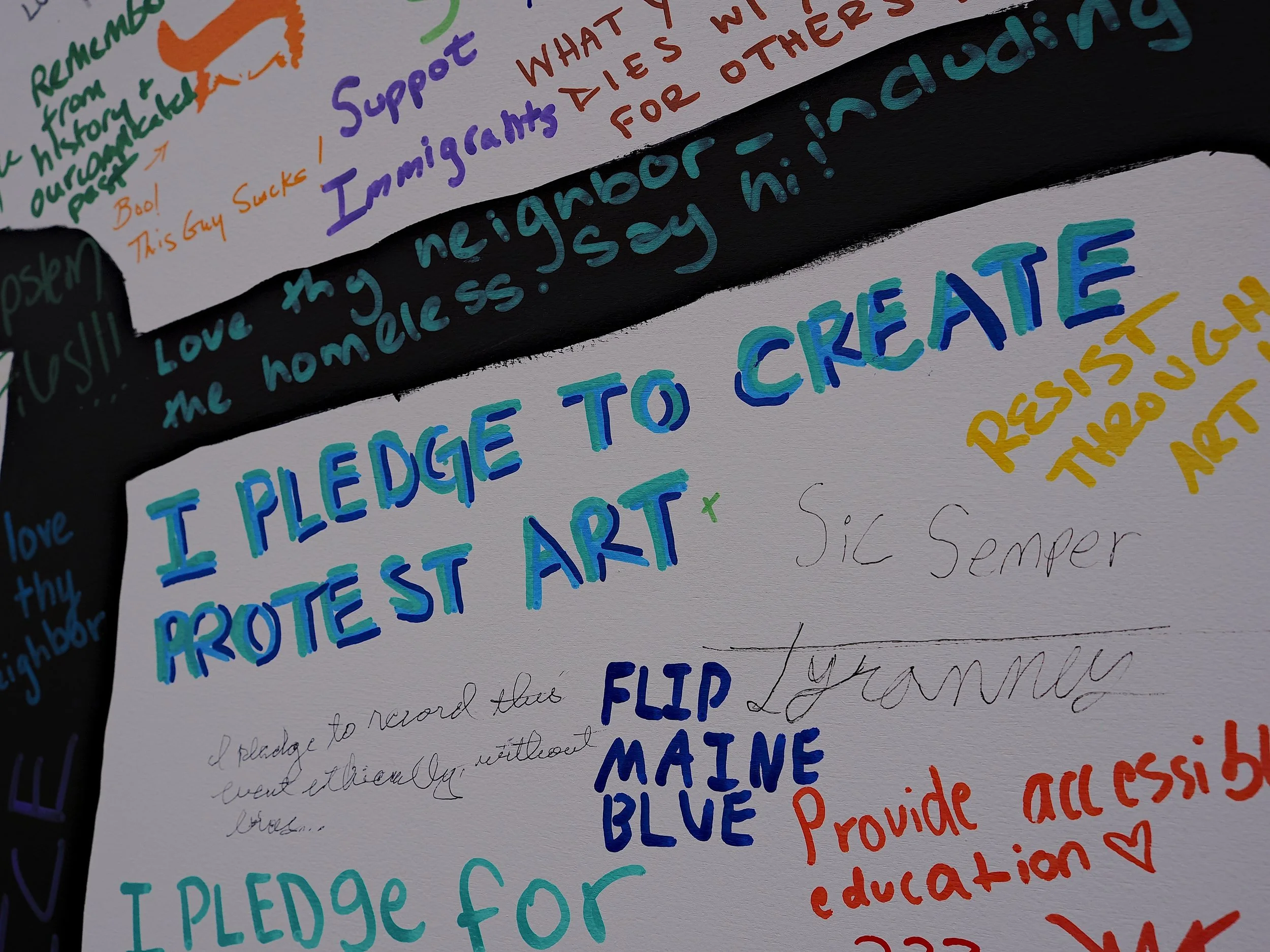
Mural at No Kings III in Boston. Photo by a Mass 50501 volunteer.
We live in an increasingly chaotic and overwhelming world, and it can be challenging to determine where best to allocate our efforts to work towards a better one. How do we divide our efforts between large protests, lobbying our elected officials, taking care of ourselves, and just trying to make sure that our bills are paid and we have food and clean laundry available for tomorrow? While all of these are worthy goals, we will be better able to pursue all of them if we dedicate some of our energy to taking care of our neighbors.
Our current challenges are the result of longstanding efforts to atomize us and prevent us from supporting one another. We are encouraged to maximize our own bank accounts so that we can deal with our problems by paying money to make them go away. Those without the resources to meet their needs at any given point are seen as pitiful if we recognize what problems they face and lazy if we do not. We see strangers as people to be ignored or feared. Meanwhile, social media algorithms intercede in our relationships with even our friends, as we desperately scroll past AI-generated slop in the hope of finding some trace of human connection. Our separation is encouraged by those who benefit from our division and seek to monetize our interactions with one another.
This disconnect weakens our resilience to the many threats that we face. Immigrants in our communities avoid going to work and school because they are afraid of being kidnapped by federal agents. Natural hazards from heat waves to hurricanes endanger us all, especially those of us with health issues or financial precarity, and these hazards are becoming more frequent and more intense due to climate change. In addition, we face the prospect of massive price increases from the administration’s unauthorized war in Iran and the resulting disruption of global supply chains. Without community support, we risk abandoning each other, especially the most vulnerable among us.
Our lack of community support also hinders our efforts to organize for a better future. Financial actions like boycotts and economic shutdowns can sway our leaders. However, without a strategy to support working-class people, these actions can disproportionately burden workers who may face reduced hours and lost wages that leave them unable to pay for basic expenses like housing and food. As we endeavor to push back against this administration and its enablers, we must avoid a strategy of middle-class people harming poor people in an attempt to get back at rich people. Instead, we should emulate the legacy of economic actions like the Montgomery Bus Boycott, where the Montgomery Improvement Association organized car pools to support Black workers who still needed to commute during the boycott.
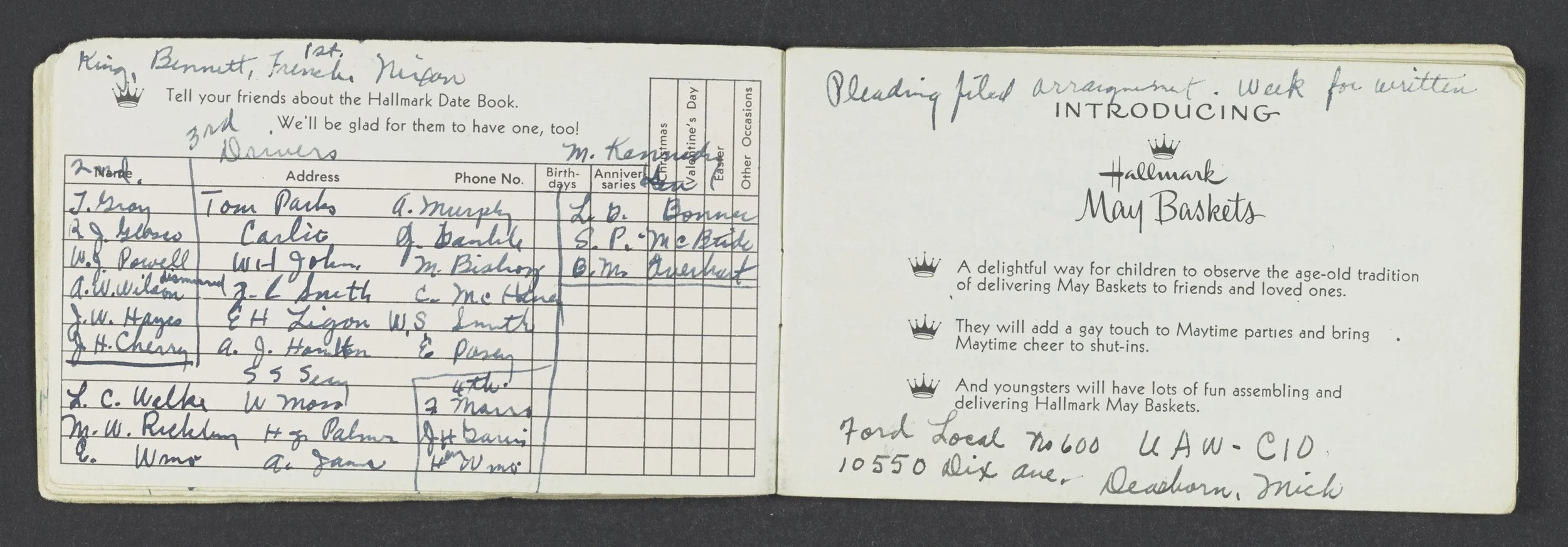
A notebook used by Rosa Parks to record the contact information for some of the carpool drivers for the Montgomery Bus Boycott. From the Rosa Parks Papers, Library of Congress (031.00.00).
Beyond direct risks to working-class people, many people who disengage from politics do so because of a lack of support. They look after their family and close friends, but investing in protecting people who they’ll never meet doesn’t seem like a good use of their time, especially if they’re already at capacity with their immediate responsibilities. In particular, people who already feel like no one else is going to help them will be especially reluctant to stick their necks out for strangers. Without a commitment to building networks of support, we risk limiting the number of people who will show up to advocate for a better future to those who are directly affected and to those who already feel supported enough by society to be able to give back. Stronger support networks also benefit those who are already showing up by increasing their resilience to life’s ups and downs, helping current activists to keep going on the sometimes-rocky path to an equitable future.
As we celebrate our accomplishments thus far and look ahead to how to more effectively take on the challenges that we face, this is the time to strengthen our support for each other. Helping our neighbors makes us more resilient to hardship and better able to unite in working towards a safe, healthy, democratic future for all of us.
Helping our neighbors can begin with small steps that build up over time to build communities of support. Get to know your neighbors, whether it’s a conversation about gardening over your back yard fence or organizing a block party. Find small ways to help each other out, whether it’s shoveling someone’s sidewalk after a snowstorm or checking in on an elderly neighbor during a heat wave. Many of us have trouble letting others know that we need help, so you can also start a neighborhood habit by asking your neighbors for help with small things, like bringing your trash and recycling to the curb when you're out of town. Like any good workout program, strengthening our community-assistance muscles begins with lighter loads that make heavier lifts possible in the future.
One of the most effective ways to support your neighbors is by joining your local mutual aid network, where you can help deliver groceries, donate an unneeded air conditioner, or chip in to help your neighbor pay their rent. Over time, we can strengthen these support networks so that our neighbors in need can get help and everyone in our communities knows that there is someone there to help them out.
In these increasingly stressful times, giving our time and resources to others may seem like the last thing that we want to do in a society that does its best to make us all feel precarious and alone. However, we have the power to help each other to make us all less precarious, less alone, and more able to unite in working towards a better world for everyone.
Enjoyed this article? Get updates on the movement, volunteer opportunities, and more by clicking below.