How to speak out against Mass’s new privacy-killing social media ban
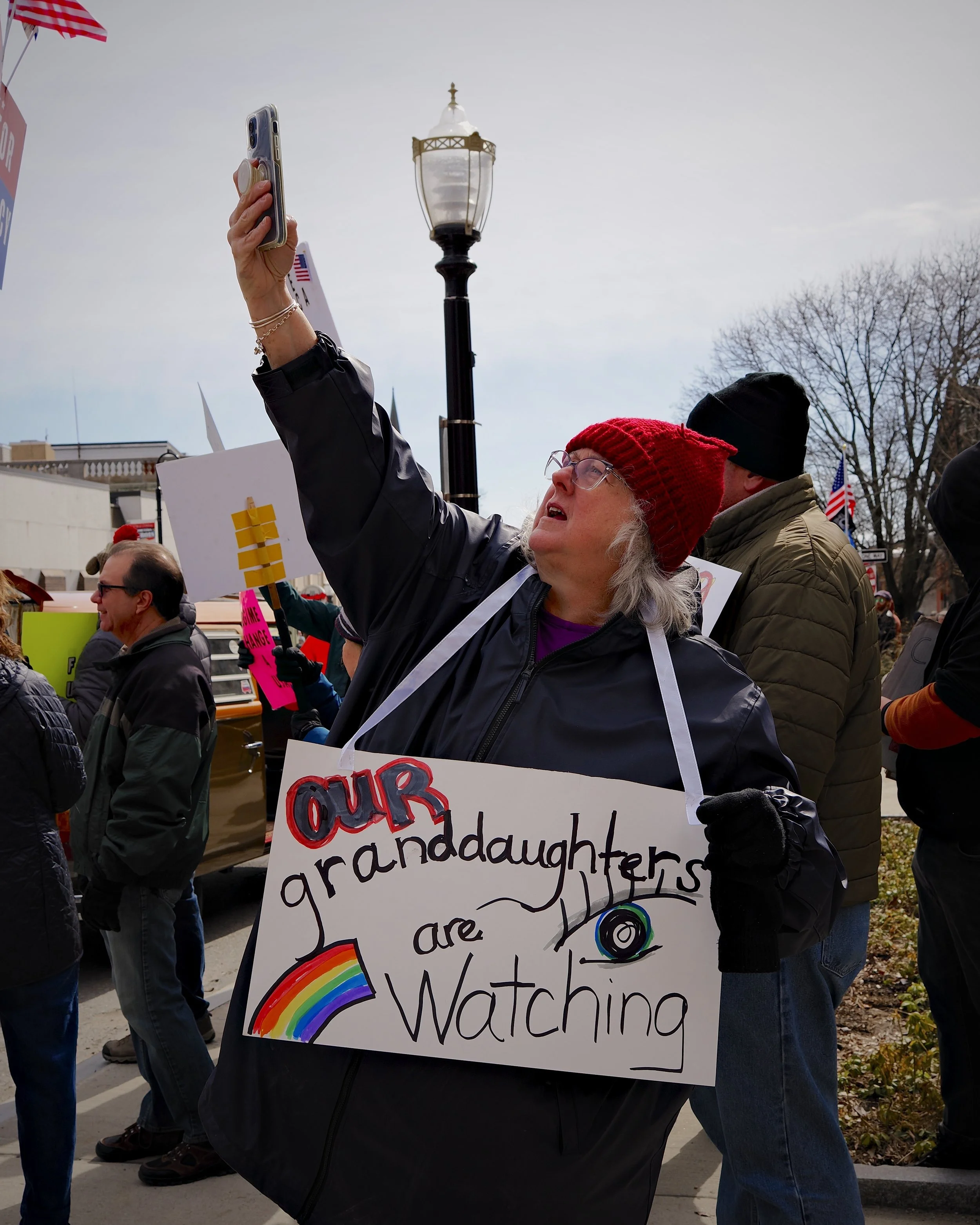
Protestor at No Kings III in Fitchburg. Photo by a Mass 50501 volunteer.
The Massachusetts House just sent a bill back to the Senate regarding cell phone use in schools. The original bill, from the Senate, would have restricted K-12 students’ ability to keep their cell phones on their person during school hours—arguably a good measure to help reverse the trend of poor school performance we’ve seen since the advent of pocket-sized personal computers. However, when the bill reached the House, our representatives chose to shoehorn in their own House Bill H.5366, dealing with the not-entirely-unrelated issue of children on social media, as an amendment to the bill.
This bill, similar (though more wide-casting) to a lot of other restrictive and reactive bills we’re seeing to limit speech online, would require social media companies (defined very broadly) to verify the age of their users, and restrict younger teens from accessing their sites. This is problematic for many reasons: our right to privacy and freedom from undue searches, the security of our data, freedom of speech, safety of at-risk teens—pick your issue of interest!
Luckily, all’s not lost yet—since the House chose to amend the Senate’s bill, the bill now returns to the Senate for passage. This means there’s still time to contact your state senator and express your disagreement for this amendment. There are many different fights to pick with this amendment, so there are many routes you can take in expressing your displeasure, but here’s what I wrote:
Dear Senator,
I was alarmed to see the House return Senate Bill S.2581 (an Act to promote student learning and mental health) with Amendment H.5366, to include age verification for social media use to ensure that teens only use social media with parents’ permission and a total ban on social media use for anyone under 14. I think that it’s a great idea to limit students’ cell phone usage in class—it serves as a distraction when kids are developing the important ability to engage their own minds, and I believe that having them work in a more analog and focused way during the school day is a worthy goal.
I agree, too, with concerns about kids (and adults, frankly) spending a lot of time on social media, where their attention is algorithmically commodified and their data is collected and sold. It’s been a real damaging force on our society that these social media and tech companies have been allowed to infiltrate every social relationship and scrap of privacy we have—both in the way that they have been incentivized to enflame the lowest common denominator of human emotion for engagement and the way that they amass surveillance data to better advertise to users, encroaching on any sense of privacy.
There are things that can be done to ensure young people are safer online—regulation could be created to hold these social media companies liable for the way their algorithms harm people; the state could intentionally create third places for young people to exist in and ensure that loitering laws aren’t unfairly used against kids existing in public so that young people aren’t forced to do all their socialization mediated through a screen; or a robust education campaign could be developed to help kids and parents learn when and how social media can become harmful and what they can do instead. In fact, access to well-moderated social media in classroom settings creates opportunities for valuable hands-on learning about social media.
But the solution is not to require social media companies to perform age verification of all users, thereby empowering them to collect yet more private data—that they won’t safeguard—in an ecosystem where they already collect way too much. Particularly in a political environment where an unpopular and fascistic federal administration is already putting pressure on social media companies to relinquish user data for the government to target individuals that are critical of the regime, any measure that increases the amount of information that tech companies are able to collect on people puts us all in danger. This amendment doesn’t protect the people of Massachusetts, and I hope that the Senate will strike down this amendment to an otherwise important bill.
Take elements from this letter, or draft your own from scratch, and send them to your state representatives!
According to the legislature’s recent press release on the topic, the bill will now return to the Senate for deliberation; but it’s worth making your opinion heard to all your relevant representatives—everyone has one senator and one congressperson in the Massachusetts legislature, and you can find your representatives here. Additionally, assuming this bill does pass through the legislature, it’ll end up on Governor Healey’s desk to sign or veto, so we should make our voices heard to her, too—you can send her an email here or call her office at (617) 725-4005.
Enjoyed this article? Get updates on the movement, volunteer opportunities, and more by clicking below.