
An election official name tag. Photo by Via Luino.
Reflections of a Poll Worker: Top Four Takeaways from a Day at the Polls
November 3rd was a day of hope and possibility—and proof that when we show up in force, we can accomplish anything. This past Tuesday, voters across the U.S. took a stand against facism and authoritarianism, upholding the promises made on No Kings day. The election results show there is no power like the power of the people, and voters in Massachusetts were no exception in demanding our voices be heard. But what does it take to make sure every ballot is counted?
I served as a poll worker for the 2026 midterms, affording me a behind-the-scenes look at what makes polling tick. More than anything else, I saw how our democracy only works if we do. After a day at the polls, these are my top four takeaways.
#1: Election Integrity Is Taken Incredibly Seriously
Anyone who says our elections aren’t secure has no idea the extent of the measures being taken to safeguard our votes. Shortly before the polls opened at 7 am, a town hall official and two armed police officers delivered our ballots—both blanks and the still-sealed ones from early voting—as well as the tabulator, which is the machine that scans and tallies each ballot. The person from town hall swore us in, each election official vowing to uphold and protect democracy. Then our work began.
We started by counting the blank ballots, making sure we reached the same number the town hall had when they packaged them up in sets of 50. At the end of the day, the number of blanks delivered plus the early voting ballots needs to match the total number of ballots cast. Once the polls open, ballots are never left unattended. Voters must be properly checked in before they’re given a ballot, and once they’re handed their ballot, poll workers are not to touch it again. If the voter is having trouble with the tabulator, poll workers verbally talk them through a solution rather than stepping in to cast the ballot for them. This ensures all votes remain confidential and cannot be tampered with.
Should a more serious issue arise, such as a paper jam, it can only be handled by the precinct’s warden and a police officer. To clear a jam, you need a special key. Even then, you can only reach the one ballot currently in process. All the fully-cast ballots are inaccessible until the tabulator has closed polling for the day. Retrieval requires both the key and an 8-digit code.
In order to prevent any sort of fraud, ballots cannot be removed from the polls. One woman was in such a rush to leave that she ran out the door—taking her ballot with her—and a poll worker chased her into the parking lot to bring the ballot back. And if someone is marked as an early voter or vote-by-mail but arrives at the polls on Election Day, they must wait for town hall to confirm they haven’t already cast a ballot before they’re able to vote. This ensures no one votes twice.
Additionally, every single voter, whether they’re an in-person or early voter, was checked in and then checked out on the registration lists. These lists had to tally with each other, both in names and in headcount. They then had to square with the number of ballots cast, which was checked against the total number of ballots town hall gave us. All of this tallying was done in pairs and crosschecked by another pair, and the tabulator’s count is unalterable.
Furthermore, there can be no electioneering within 150 feet of a poll. Neither voters nor poll workers are allowed to wear or carry anything with a political slogan or candidate’s name, and there can also be no discussion of how you plan to vote. For example, while waiting in line near the check-in table, one voter directly asked me how I’d voted, and I said while I’m ordinarily happy to share my stances, I wasn’t allowed to do so in the polling area. Later, another voter had to be asked to refrain from telling those around him how to vote; he complied without much fuss.
At the end of the night, the town hall official and police officers removed all the cast ballots and any remaining blanks, as well as the tabulator itself, for secure storage. I already had a fairly high level of confidence in our election integrity, and working the polls has shown me just how seriously election security is taken.
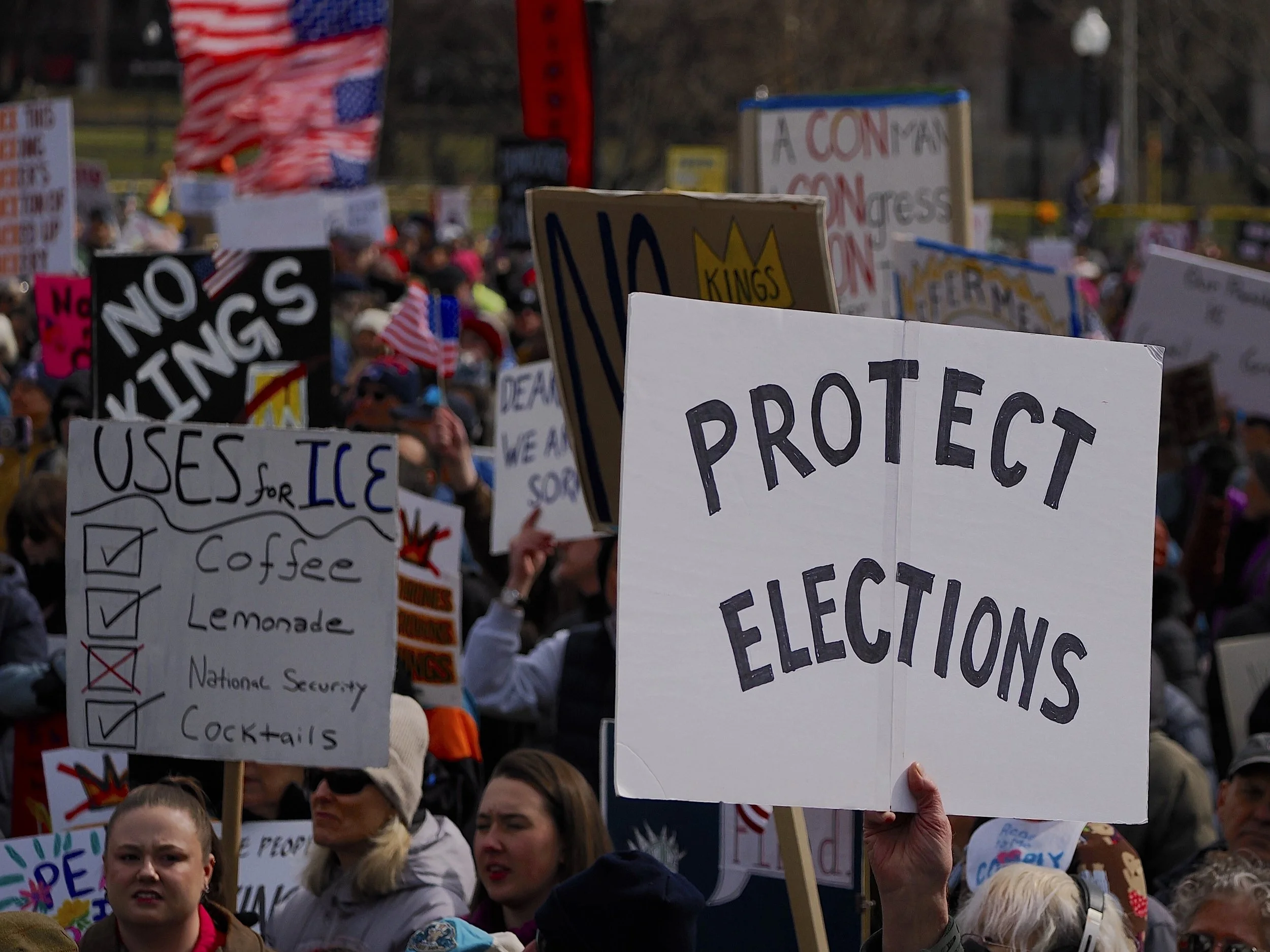
No Kings 3 in Boston. Photo from a Mass 50501 volunteer.
#2: Poll Workers Deserve More Appreciation
Election officials are the backbone of our democratic process. Without the immeasurable effort, care, and commitment of poll workers across the U.S., elections would cease to function. My fellow election officials and I worked 17.5 hours on Election Day and helped about 1,800 people cast their ballots. Many of these voters were perfectly friendly, but some were not.
We inevitably had several queues throughout the day, and a fair number of voters came out of them expressing annoyance with us. Several people even went so far as to regard us with suspicion. One voter called the tabulator “a shredder” while another demanded to know how we ensure only eligible citizens vote. When I explained how voter registration and election day check-in work, he insisted not all people are required to show proof of citizenship to register. (Spoilers: yes, they are.)
I was constantly impressed by how calm the other poll workers remained, no matter the situation. They kept cool as lines wound around the room, when a paper jam caused a delay and frustrated voters, and even when one voter threatened physical violence. Since voters cast their own ballots, scores of people have to be taught how to use the tabulator in rapid succession. During a crush of after-work voters, an older white man started screaming that I was interfering with his rights because I was giving him the same explanation on how to use the tabulator that was given to 1,800 other people that day. He demanded I stand at least six feet away, and when I didn’t immediately back up, he swung his hand at my face in a threatening manner. Luckily our precinct’s election warden stepped in and de-escalated the situation. No one was hurt, and the man was able to cast his ballot. Unsurprisingly, he did not follow the instructions and tried to shove both cards of the ballot in too quickly, which would have caused a paper jam. The warden had to swoop in and stop him from forcing the second card in too soon.
Despite this, most voters were courteous and patient, and overall, working the polls was a positive experience. I was nervous about being a poll worker, particularly as I’ve previously had negative interactions with them when I was a voter, including one worker back in 2016 who snatched my ballot from me before I could cast it. While bad actors may be out there and should be reported, working at the polls myself has shown me that, on the whole, poll workers deserve mad respect. The next time you vote, remember to thank your poll workers!
#3: People Find Voting High-Pressure, But It Doesn’t Have to Be
Even small hiccups can result in delays, and no one likes waiting in line. In this regard, my precinct started off on the wrong foot. Our tabulator was delivered later than expected, and was so securely sealed even we couldn’t open it. There were two locks, each requiring its own key, and for added security, these keys were transported separately. By the time we located the police officer with the second key and got the tabulator running, it was 7:15 am. The poll should’ve opened at 7, so we already had a line out the door. A few voters got so frustrated they left, though at least some of them returned later in the day.
Many voters are under pressure to get in and out as fast as possible. They have work, or are corralling bored children, or otherwise need to get back to the business of living. Such time constraints lead to rushing, which increases the odds of an error—which of course results in even more delays and frustration. To ensure it’s correctly tallying votes, the tabulator is sensitive to ballot errors. Ballots are rejected for things like stray marks, even small ones, or if voters make checks or Xs instead of filling the ovals in. When the tabulator rejects a ballot, it returns it to the voter so it can be marked as spoiled and replaced. That voter needs to fill out a fresh ballot, and for this election, the length of the ballot made such a prospect particularly vexing.
In Massachusetts, many districts had at least 12 offices to vote on, from our state’s next governor to local representatives in General Court, as well as 9 ballot questions—the most we’ve had since 1994. Every ballot was three pages long, which is a lot to complete once let alone twice, and some voters decided it wasn’t worth the time to correct an error. In those cases, they had the option to cast the ballot anyways. This means that the unaffected lines of the ballot are counted, but the line with the error is not. Care and accuracy in filling out your ballot are especially important if you vote early, since in those cases, it’s impossible for the ballot to be corrected and thus that line will not be tallied unless the tabulator indicates the ballot should be hand tabulated at the end of the night.
Such struggles can be avoided if voters take their time rather than trying to be fast. Double check each option before filling in an oval, and make sure to follow the instructions written on each ballot. If you make a mistake, don’t be afraid to ask for a new ballot! You have the right to ask for a replacement ballot twice, for a total of three ballots. Ballots with errors are given directly to the warden, who writes “spoiled” across them in red pen so there can be no confusion.
I am also an advocate for declaring Election Day a federal holiday. At the very least, Massachusetts could make it a state holiday or require employers give their workers several hours of time off to go vote. Long lines at polls are all too common, and the time it takes to vote is prohibitive to many Americans, leading to lower overall turnouts. Making Election Day a holiday would grant people more flexibility, and would encourage higher voter turnout, especially among Americans aged 18-65. It would also allow more people to be poll workers themselves!
#4 You Should Become a Poll Worker
I signed up to be a poll worker because I care deeply about our democracy, and believe firmly in the importance of fair and free elections. Working the polls offered a fascinating look inside the process of how ballots are tallied, and I felt like I was genuinely making a difference and providing a public service. It was incredible to be part of it all, and much better than having nothing to do but anxiously check election results all day. Having stayed at the polls until 11:30 pm, I can confidently say every last ballot in my precinct was counted.
The position of poll workers—like most political offices—is hungry for new blood. At 28, I was by far the youngest election official in both of the precincts sharing my polling location, and likely one of the youngest in the entire state. If we want our nation to be for all the people, then all of us need to participate, and at every level.
Younger Americans have so much to bring to the table, from energy and enthusiasm right down to more experience troubleshooting technology, which is helpful when faced with a jammed tabulator. I know life gets busy—believe me, mine does too—but our democracy matters. It’s worth the effort to pay attention to politics. It’s worth the time to vote. And it’s worth seeing our democratic process up close. Working the polls is an experience every American should have.
Enjoyed this article? Get updates on the movement, volunteer opportunities, and more by clicking below.