We Cannot Let This Democracy Die
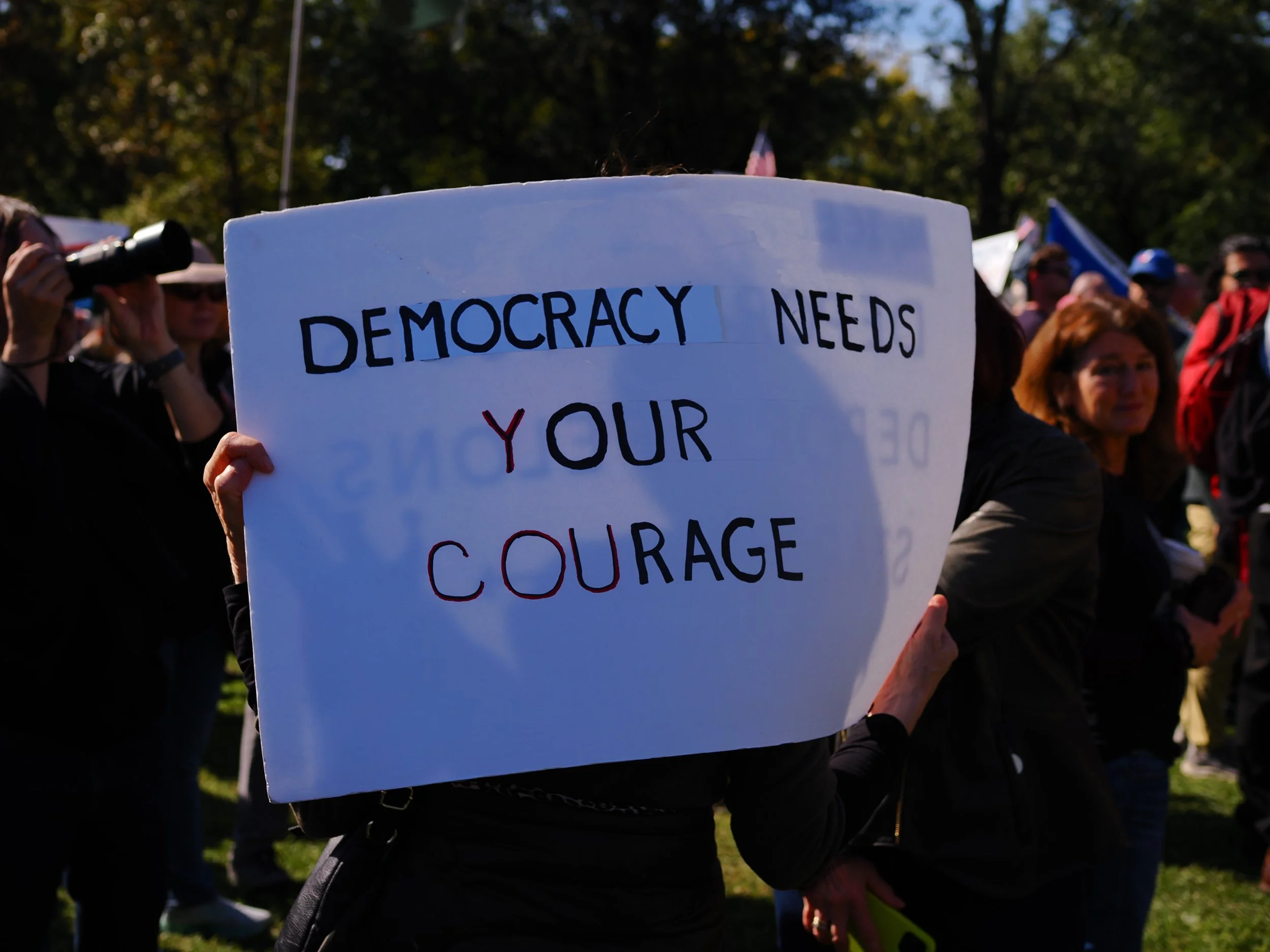
Activists at No Kings 2 in Boston, October 2025. Photo from a Mass 50501 volunteer.
If raising our voices was futile, they wouldn’t try so hard to silence us.
The midterms are less than three weeks away, and protecting our right to vote, both in Massachusetts and nationwide, is vitally important. From attempts to stop mail-in voting to SCOTUS enabling Trump to demand states purge their voter rolls, when it comes to defending our democracy, there’s an abundance of work to be done. You can start by registering before the October 24 deadline, and by making a plan to vote—either early or at your polling location on election day (Tuesday, November 3rd).
In today’s world, it’s also critical that we be mindful of the websites we use to ready ourselves for the election. One of the latest schemes to disenfranchise voters comes in the form of a website called “Vote Safe.” Funded by Elon Musk, this website touts a .org URL and an American flag icon. It claims it’s there to “ensure your voice is heard” and looks like a legitimate way to check your voter registration—but it isn’t. Instead, Vote Safe is stealing personal information and selling off voter data. It’s designed to deceive voters who think they’ve been accessing the official, state-run records. When you check your registration, ensure you’re on the state-run site only. It’s up to us to keep each other safe from these kinds of scams, educate ourselves on our rights, and stand up to any attempts to silence our vote.
I’m no stranger to having my vote challenged. Still just shy of thirty, I’m old enough to have voted in only three presidential elections—and in two of them, my right to cast a ballot was contested.
The first was in Ohio in 2016. As an over-eager college freshman, I registered at my university address well ahead of the deadline, and double-checked all was well several times. On election day, I walked over a mile to my polling place—only to be met with suspicion. The worker stationed by the ballot scanners was an elderly woman in a red, turtleneck sweater. She looked at me like I was a crime scene waiting to happen. I was already on edge because a few weeks earlier, a group of frat bros had followed me across campus yelling about how when their man DJ got elected, I’d be deported back to where I belonged. Across the years, people had called me “Dora the Explorer,” a “monkey,” and “the color of a burnt marshmallow” because of my skin tone, and I could see those same thoughts behind this woman’s eyes. She (wrongly) assumed I’m Hispanic, and (wrongly) decided that made me lesser.
When the poll worker yanked my completed ballot from my hands before I could scan it into the counting machine, I was powerless to stop her. I asked about provisional ballots, but when she said I was ineligible, I didn’t know enough to fight back. As she escorted me out the door, I was mortified. At the time, I thought I must be the only person in the entire country being treated that way—but the truth is, my experience was a state-wide, coordinated attack designed to keep college students, particularly Black and Latine students, from voting. Despite pushback, these kinds of restrictions are getting worse, and not just in Ohio; students face unique and often targeted challenges to their voting rights across the whole country. That’s one reason among many why it’s so important to pass measures like Massachusetts’s Ballot Question #4, which would allow same-day voter registration and improve voting accessibility.
The second challenge I experienced was in 2020, as a grad student in New Hampshire. I’d learned my lesson four years ago, and this time, I went to the polls prepared. I took off my Biden-Harris button before approaching the building. My name was on the registered voter list, but this worker—another elderly woman in red—said she couldn’t accept my passport. I pulled up the nh.gov official page of acceptable IDs, which clearly lists passports like the one I’d presented. When she continued to refuse, I demanded her full name and said I was going to report her to the election protection hotline. She never told me her name, but she did give me a ballot. Scanning it into the machine should have been a satisfying victory, but all I could think about was how badly I wanted to run away. Once again, I felt humiliated and isolated, like the problem was me. But the problem was the system. Six years later, New Hampshire students are still facing these same challenges.
In 2022, I voted absentee. I expected working as an English teacher in another country to make it harder to vote, but instead, it was far easier. Not one person questioned my right, even as I mailed in my ballot from—somewhat ironically—Mexico. By 2024, I was voting by mail for both the primary and the general, and I’m voting by mail for the 2026 midterms as well. Remember, ballots must be mailed before October 27, and postmarked before November 3!
Here in my home state of Massachusetts, I like to think no one would try to reject me at the door, but while not foolproof, voting by mail is easier—and safer. The Trump Administration has made conflicting statements on if ICE will be at polls nationwide, and even the possibility may intimidate voters into staying home. Having had an elderly white man threaten to call ICE on me for daring to visit the dentist’s office this past summer, I’ve certainly been intimidated into carrying my passport everywhere. There are a number of ways to circumvent these concerns, including voting early, either in-person or by mail. To be sure your mail-in ballot arrives on time, you can also use a drop box, which is what I plan to do.
As I fill out my ballot, I know I’ll be thinking: How many eligible voters are having their rights challenged this year? How many will have their ballots literally ripped from their hands? How many voters throughout US history have faced far, far worse than an obstinate poll worker? This voting season, know your rights. Even if the polls close, stay in line—you can still vote. You’re allowed to ask for a new ballot if you make a mistake on yours, and if there’s an issue with your registration, you can cast a provisional ballot. You do not need to speak English, pass a test, or pay any kind of tax or fee to vote. And if someone tries to intimidate you or suppress your vote, report them.
I’ve never filled out a presidential ballot for a general election that didn’t have Trump’s name on it. I’ve never voted in-person without someone trying to silence me. I’ve never been more concerned for the state of our nation than since Trump 2.0 began. But I’ve also never given up raising my voice, speaking out, and demanding better. Because if there’s one thing I’ve learned while doing battle with bureaucratic biddies in red, it’s that if our votes didn’t matter, they wouldn’t try so hard to take them away. Now more than ever, it’s up to us to protect our democracy. We cannot let liberty die, with thunderous applause or otherwise.