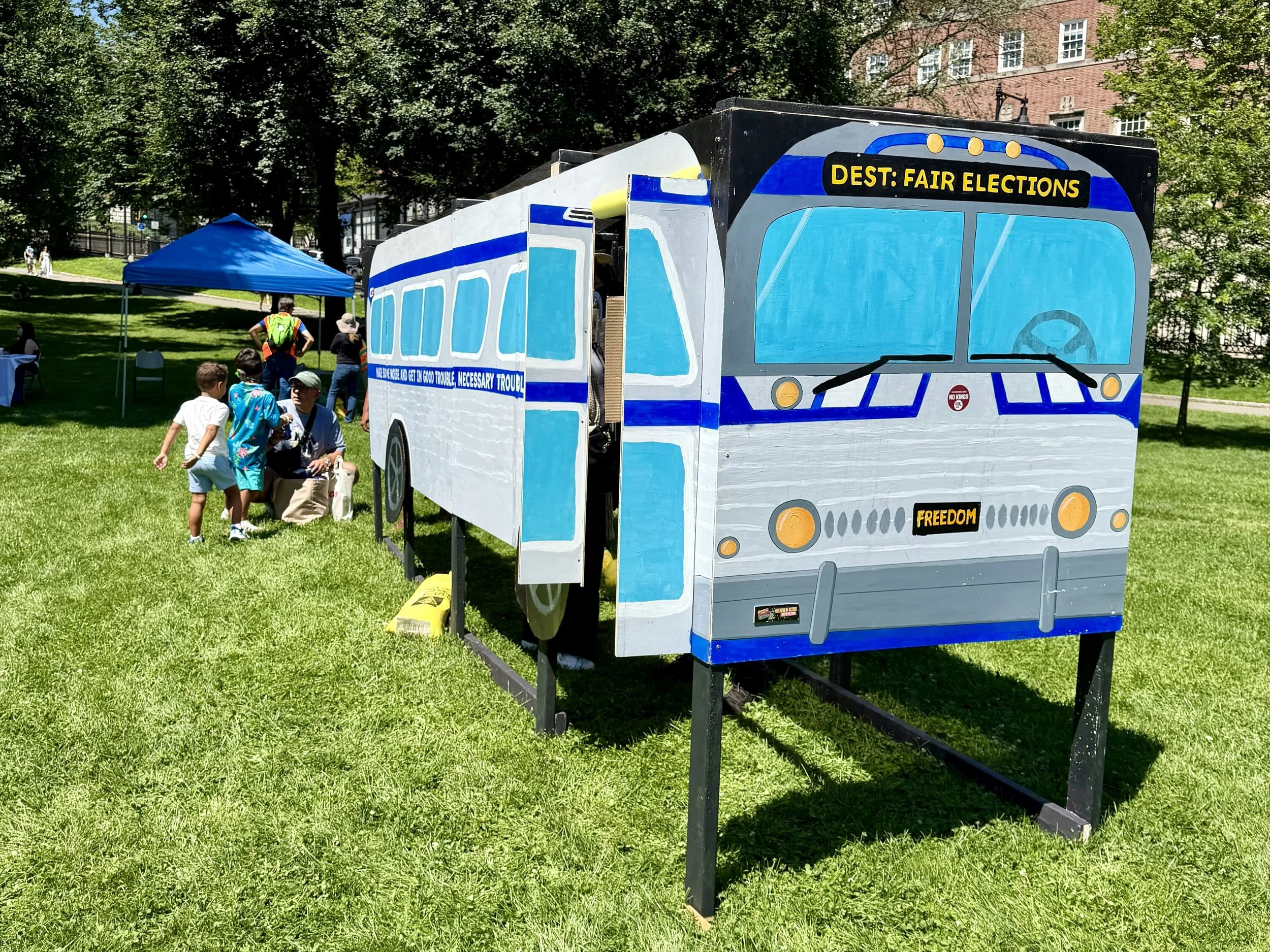
Mass 50501’s Mass 50501’s Destination: Fair Elections art installation on display at Good Trouble Lives on.
Over the weekend of July 17-19, Mass 50501 participated in Good Trouble’s national weekend of action honoring the late congressman John Lewis. Throughout his life, Lewis worked tirelessly for civil rights and particularly for equal access to voting rights. He preached and taught about nonviolent civil disobedience, leading efforts such as sit-in demonstrations and the Freedom Rides, both of which were successful means of protesting persistent, unlawful segregation in the Deep South and of raising national awareness of the civil rights movement. Lewis’s actions were instrumental in passage of the 1965 Voting Rights Act, which secured and protected the right to vote regardless of race. For some people, especially those whose civil rights education may have been sorely lacking (like in Mississippi, where 2013 textbooks reduced civil rights to a measly five pages out of one hundred), perhaps the story seemingly ends there. Of course, this is not the case. Our country’s history of voting rights is messy, complex, at times painful, and—importantly—still being written.
Since its passage, but particularly in the past decade and a half, the Voting Rights Act (VRA) has been under attack. In 2013, Shelby v. Holder overturned the formula that triggered the VRA’s preclearance requirement which prevented discriminatory voting practices by having locations with a history of disenfranchisement submit any changes to voting practices (e.g., registration requirements, district maps, polling locations, etc.) to the federal government before enacting them. Sections 4 and 5 of the VRA together provided a way for the federal government to proactively defend voting rights in areas that were historically subject to discriminatory policies. The consequences of striking down these sections were felt almost immediately. Like sharks smelling blood in the water, some states rushed to enact discriminatory changes to their voting practices.
In the years since, attacks on voting rights have increased, from the more blatant January 6, 2021 attempt to block election certification, to the 31 voter restriction laws in 17 states passed in 2025. Laws that will be in affect for the mid-terms. In April 2026, Louisiana v. Callais further weakened the VRA when the Supreme Court ruled that Louisiana's 2024 map was an unconstitutional racial gerrymander. More recently, we have threats of ICE showing up at polling places, the SAVE America Act (incorporated into the NDAA that just passed the House and currently sits with the Senate), and Trump’s recent state of the union, which we will not even dignify with a link.
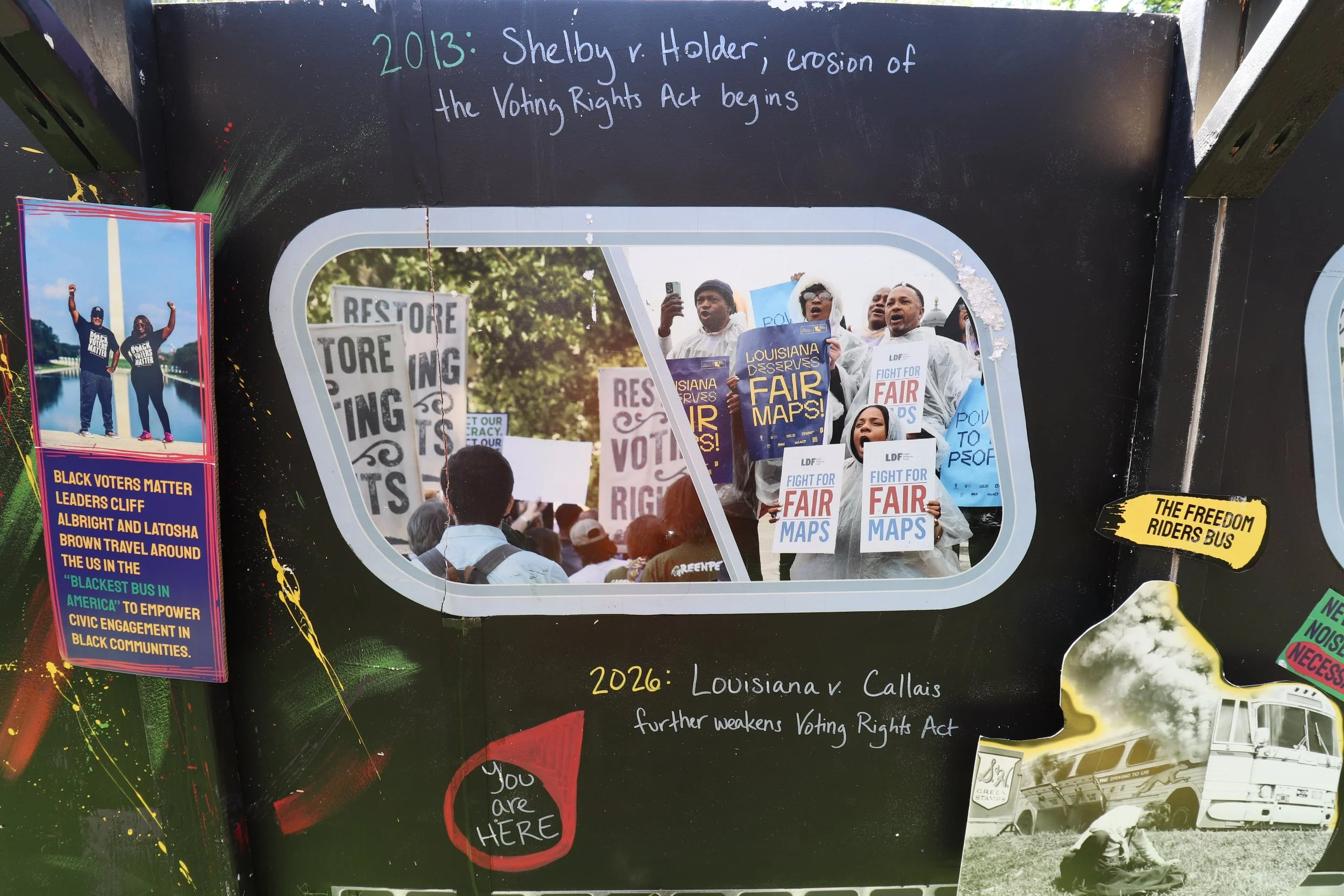
Recent attacks on voting rights and activists’ efforts to preserve our right to vote, as portrayed in Mass 50501’s Destination: Fair Elections art installation at Good Trouble Lives on.
In response to these increasing attacks on voting rights ahead of midterms, Senator Ed Markey tweeted the following:
Trump must be impeached for undermining and subverting our free and fair elections. And when he sends ICE agents to the polls, then we must turn civic action into civil disobedience and take to the streets. Sit in. Protest. Withhold our labor. Everything must be on the table.
It’s probably not a coincidence that Markey called for action on the sixth anniversary of John Lewis’ death.
Events of GTLO’s national weekend of action were planned before the “dumbest national address from a U.S. president” (many people are saying it), and these recent events further impassioned participants.
GTLO Mass was a weekend-long celebration sponsored by a coalition of activists, grassroots organizations, faith leaders, and community members. Partners included organizations like Indivisible Boston, Mass 50501, True North Action Alliance Boston, and more. Each day’s events were organized around the core principles of TEACH! REACH! PREACH!, honoring Lewis’ legacy and carrying the torch of the civil rights movement by doing what Lewis loved most: organizing, educating, and taking action.
On Teach! Day, communities were encouraged to attend a virtual screening and panel discussion of LOVE, JOY & POWER: TOOLS FOR LIBERATION, an important documentary about the Black Votes Matter Fund’s civic outreach that helped flip a deeply southern state from red to blue in 2020.
On Reach! Day, participants were encouraged to learn about their voting rights and how to organize at the local level via training resources (available on the Reach! page). Then, people were encouraged to get out in their communities to share voting resources and collect voting pledges. (Similar to our volunteers’ aims at recent Porchfests! We hope to see you at a future Porchfest this summer! If you’re interested in doing more to support voting rights, please join us in Discord and schedule a volunteer onboarding call!)
A huge number of events across the state comprised the Reach! day actions, from Springfield to the Cape and everywhere between and beyond. As part of expanding our reach, Mass 50501 tabled at Wokestock, a music and arts festival in Allston conceived to meet the urgent political moment with art, music, community building, and creativity. Mass 50501 displayed an art installation—Destination: Fair Elections, a 16-foot long acrylic on plywood tribute to the Freedom Riders, one of whom was John Lewis. Visitors were encouraged to board the Freedom Bus and go on a tour of voting rights history. The interior was a montage of historical moments culminating with a call to action for the present day: “History is happening now. What will your role be?” Fun fact: the bus’ plywood body was reused from the No Kings 3 We the Powerful interactive art installation. While the primary reasons for reuse were to be ecologically and economically conscious, we admit another reason was knowing that each piece of plywood held elements of our past via the voting rights timeline and pledges for our present and future.
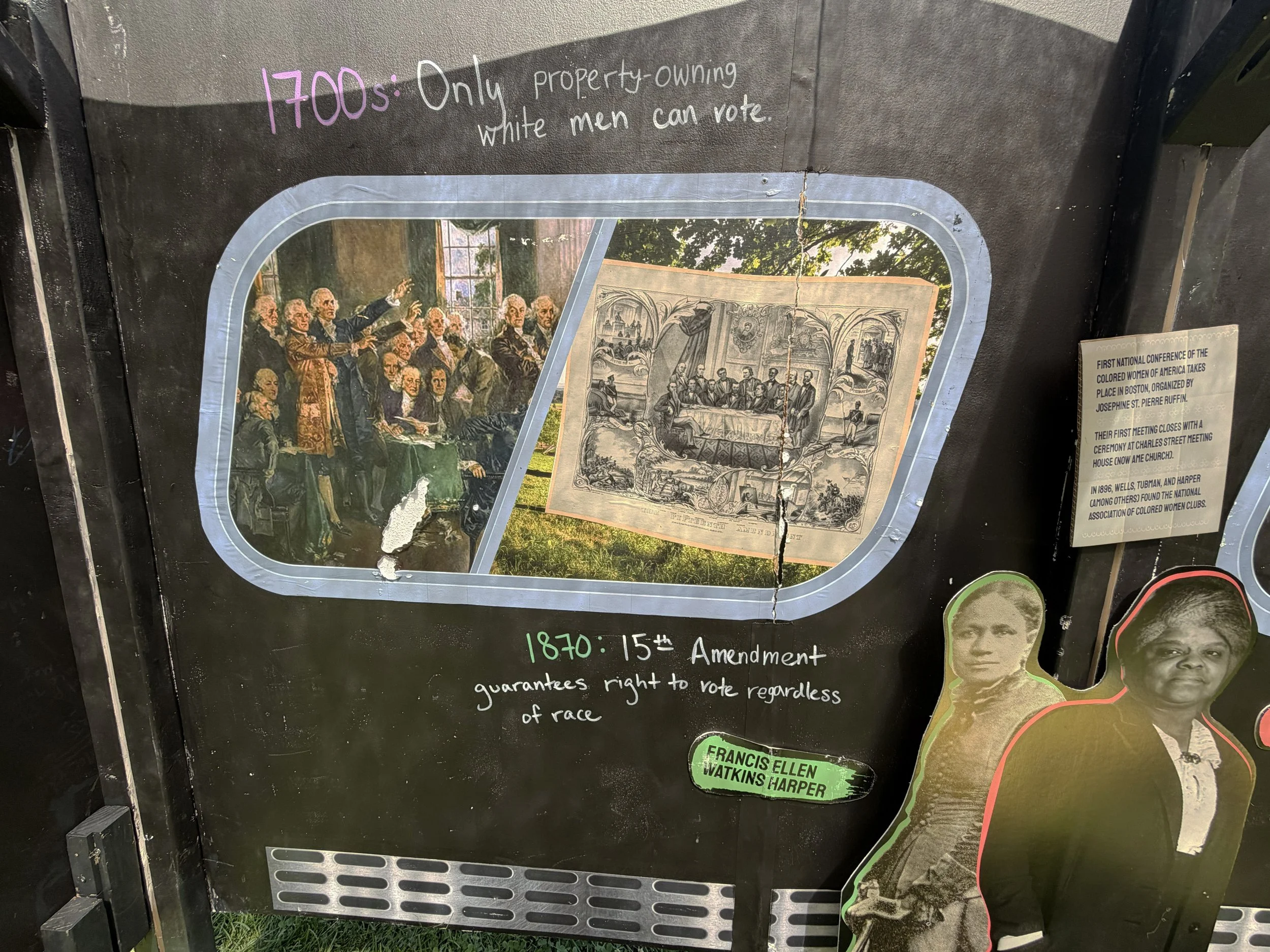
Mass 50501’s Destination: Fair Elections art installation included an overview of key events and activists in the fight for voting rights, such as the passage of the 15th Constitutional Amendment and civil rights activist Ida B. Wells.
The weekend came to a close on Sunday’s Preach! Day. Participants were encouraged to commune spiritually (however they chose) to start their day. Some faith organizations pledged to specifically speak about John Lewis, Good Trouble, and voting rights during their Sunday services. Afterwards, folks attended a joyful community gathering on Boston Common for picnicking, voting craftivism, and opportunities to connect with organizations supporting Lewis’ message in Massachusetts. The program was MC’ed by Karl Claire Müller and featured interfaith music from professional artists, speeches from faith leaders including Rev. Kevin Peterson and Rabbi Greg Hersh, and a special vigil honoring John Lewis.
John Lewis’ spirit of teaching and reaching communities and preaching about voting rights must live on. The lessons are too numerous to count, but here are a few:
We can remember that our journey is long, and that movement engagement may wax and wane. When Lewis worked to desegregate Nashville around 1961, he dealt with reduced engagement after some successful sit-ins as members of his group graduated or moved away. His core group dwindled down to seven people (including himself), yet they persisted and brought about real change.
We can—like Lewis—reaffirm our commitment to nonviolent action.
We can remember to take care of ourselves because we can’t pour from an empty cup. Our “village brains” are not wired to be constantly inundated by global news. If we allow ourselves to be overwhelmed, or to slip into unproductive hyperfocus, we risk complete disengagement, and then really nothing will get done.
We must work as a team, even when our team is small. Sometimes that team is a handful of people building and painting a giant plywood bus in someone’s garage, and sometimes the team is eight million people standing in solidarity nationwide.
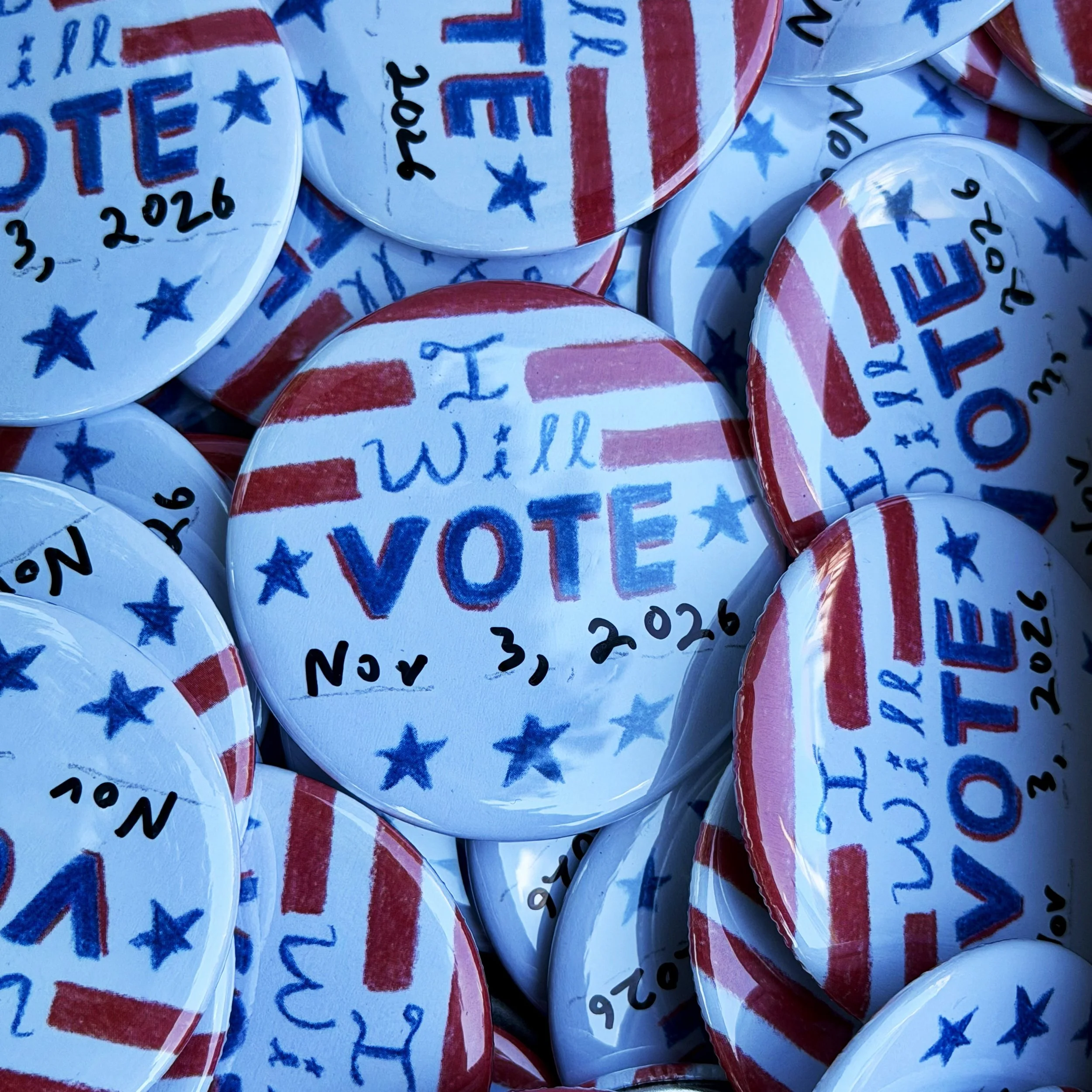
Buttons committing to voting in the upcoming midterm elections on November 3, 2026, distributed at Good Trouble Lives on.
And most importantly today: we must value and protect our sacred right to vote, encourage voter engagement, support disenfranchised communities, and fight back against unconstitutional voter suppression and misinformation campaigns. Our relative privilege as residents of a state where elections are held with a high degree of integrity doesn’t absolve us of the necessity to work against the injustice and voter suppression that we see in other states, or to robustly defend our right to vote in our own state, particularly when we see threats of federal interference on the horizon.
✓ Check out goodtrouble.mass50501.org/resources.
✓ Sign the ACLU’s Defend our Voting Rights petition.
✓ Brush up on your voting rights (via the ACLU).
✓ Head to VoteinMA.com for information about Massachusetts elections.
Make sure you are registered to vote. (The deadline to register to vote in the Massachusetts primaries is August 22nd.)
Confirm your polling place.
Request a mail-in ballot (if desired).
✓ Volunteer and be trained to be a poll watcher.
✓ Support efforts that support elections, like Common Cause and Dunk the Vote.
“Ours is not the struggle of one day, one week, or one year. Ours is not the struggle of one judicial appointment or presidential term. Ours is the struggle of a lifetime, or maybe even many lifetimes, and each one of us in every generation must do our part. And if we believe in the change we seek, then it is easy to commit to doing all we can, because the responsibility is ours alone to build a better society and a more peaceful world.”
— John Lewis (emphasis added)
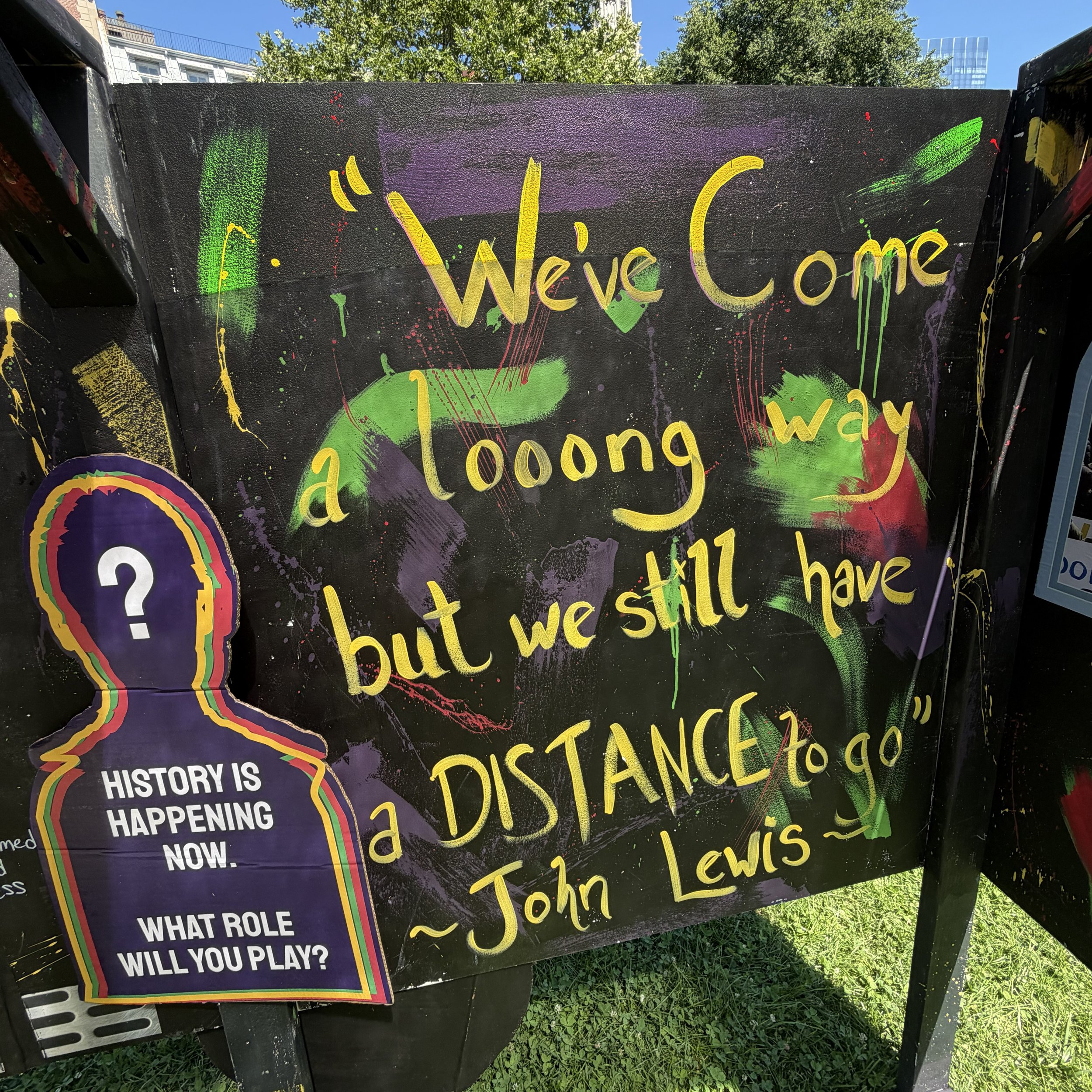
Some wise words from John Lewis incorporated into Mass 50501’s Destination: Fair Elections art installation.
Enjoyed this article? Get updates on the movement, volunteer opportunities, and more by clicking below.