Democracy Means Talking To Each Other
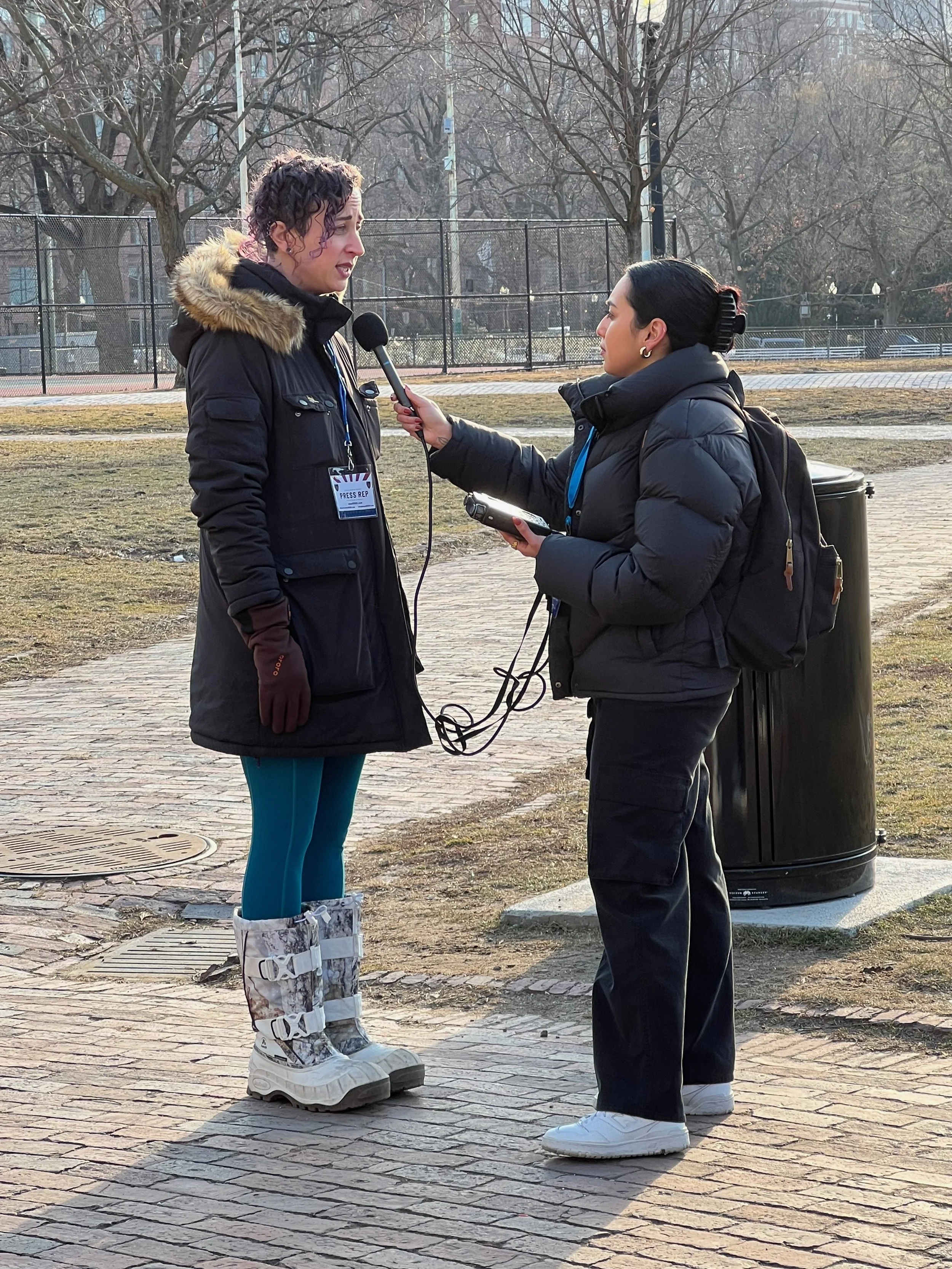
Photo via Mass 50501 Volunteer
The United States is a democracy. In a democracy, the people rule.
Much is left unspoken in those statements, raising many questions about what our political system should be. How should the will of the people be measured? What should the relationship be between democracy and personal liberties? Who are ‘the people’? However, I want to ignore these particular issues and instead focus on a different question: What does a democracy require of its citizens? Specifically, if democracy is run by people in the collective sense, what does that require of us as individuals?
If, like me, you believe that society is for managing the competing interests of its people, then the answer is simple. In order for society to justly manage competing interests, it is critical that the interests of all people be known. This can only happen if people communicate their desires. Therefore, the core requirement of individuals is to express themselves to others. This necessity of communicating is not limited to marginalized communities.
To demonstrate this need for communication in a less abstract way, look no further than what has happened in recent decades. As screens have swallowed up more of our daily time, the frequency of face-to face-conversations has plummeted, with more people eating, drinking, and living alone. As people have turned inward, participation in many social institutions, including marriages, religious institutions, and unions have all declined. While each of these institutions have faced a myriad of complex factors for their decline, each has undoubtedly resulted in fewer opportunities for organic expression, dehumanizing us from each other and leaving us more vulnerable to mutual misunderstanding.
This misunderstanding has bred distrust, with demonstrable effects on our politics. We may gripe that our representatives don't reflect our values, but there is one clear way in which members of Congress have followed the people: the decline in annual Congressional legislation has tracked with the rise in partisanship among regular Americans. This abdication of Congressional authority has laid the path for the current administration to seize power beyond what the Constitution allows.
What this means is that, for those wishing to support democracy, key discussions happen beyond the halls of power, and even beyond street corners during activist assemblies. They take place in homes, at work, and in gathering places across the country. They happen at parties, dinners, outings, and one-off meetings at the bar—any place where people talk and form a greater understanding of each other. These talks don’t need to be “political” for them to matter—they only need to be authentic. Democracy only works if we talk to each other.
The need for these conversations outweighs reasons not to speak up. When hearing somebody say something which suggests a different lens for understanding the world than your own, or a contrasting set of values, it can feel uncomfortable replying with a perspective that could highlight those differences. But avoiding these conversations is a mistake. Hashing out disagreements is necessary for the mutual understanding required in functional democracies. Talking allows you and other interlocutors to learn from each other, whereas staying silent only perpetuates ignorance. Some may also hold back because they fear their identity won't be accepted. This fear is reasonable, but it isn’t always true. Many have changed their beliefs when learning from people with different identities, as best evidenced by the doubling of support for gay marriage in thirty years.
What I mean to say is that self-expression is a public service. However, it can also be self-service, because self-expression is also a cornerstone of building community. Communities are vital to our happiness. They provide support during hard times, and pleasure during good times. The health benefits are enormous, not to mention the social benefits. Community-building need not conflict with activism. In fact, the two often go hand-in-hand. To give just one example: in this country, craft circles have been bringing people who would go on to lead social campaigns together for centuries, from Revolutionary boycotts to the origins of Black Lives Matter.
None of this is to say that talking to strangers at concerts, or in line for food, is going to immediately solve our immense challenges. We must also communicate our priorities at the ballot box. But we can all do our part to bolster democracy. To this end, we at Mass 50501 have started our own craft circles (the products of which will be sold at upcoming craft fairs) and launched a Perspectives Series for people to broadcast their experiences to a large audience. However, our organization alone cannot make up for society’s communication deficit. So, this holiday season, let people know who you are. Talk to them about your activism if you are so inclined, but at minimum, tell them your joys, your worries, your history, and your priorities. You, your community, and your country will be better for it.
Enjoyed this article? Get updates on the movement, volunteer opportunities, and more by clicking below.