A Reluctant Activist
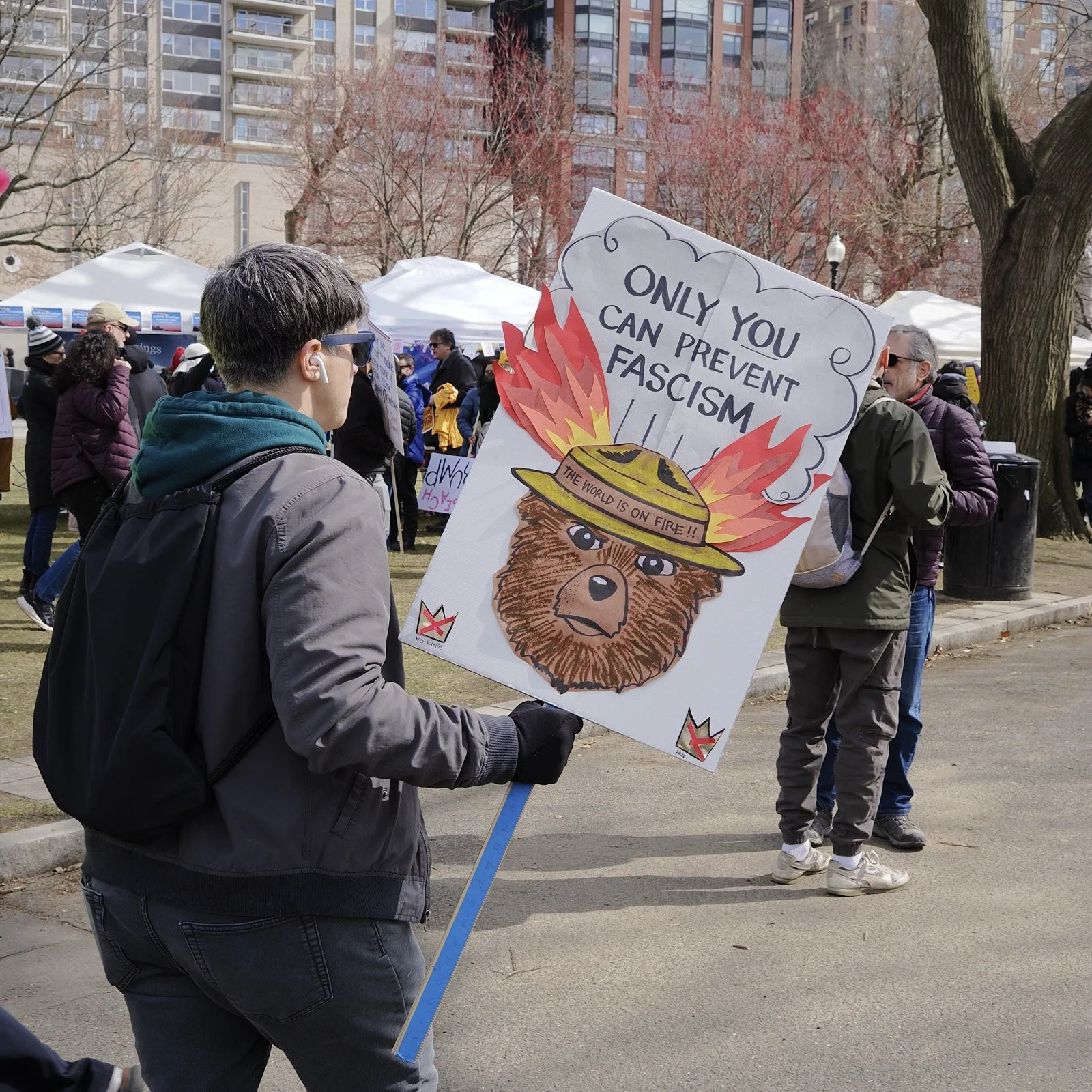
Photo by Mass 50501 volunteer.
In recent weeks, you have heard from conservatives explaining why they became involved in our movement. Another author has chronicled their history with left-wing activism. This week, I want to tell you my story of becoming politically active, coming from the 91% of Americans whose political engagement stops at reading the news and voting once a year.
Let me begin by explaining my ideals. People sometimes ask me what political label I would apply to myself. If given the option, I prefer not to answer. If forced, I say "pragmatist." I reply this way because beyond thinking that our social systems, including our government, should bring the greatest amount of good to the greatest number of people, I don't hold strong beliefs on how that ideal should best be achieved. Additionally, as a rule, I reject any proposed solutions to major problems that can be explained quickly, and I am skeptical of anyone who claims that there are straightforward solutions to our most pressing issues. (I have long stayed away from Twitter.) I believe that fixing society’s ills is a great responsibility that requires careful thought, and because I don’t have the time to consider the full effects of any given policy proposal (who does?), I prefer to stay quiet.
As a result, I am easy to persuade but hard to convince. Sometimes, I am a political vacuum that fills up with what I have most recently been exposed to. I couldn’t confidently tell you what the ideal firearm restrictions are, or if rent control is good or bad. I think that if a social democrat told me their plans for a more progressive tax schedule, or a libertarian told me that a flat tax rate was the best way to go, I could be moved by either alone. If I heard both arguments, I would probably conclude that the best tax schedule is somewhere in the middle.
If I am persuaded by a set of talking points, this does not transform me into a like-minded activist. A short anecdote shows this. When I was a college freshman, a student group working to help the cafeteria workers unionize littered the area outside of my residence hall with flyers about an upcoming rally right around the start of classes. The idea of workers being able to afford a modest living sounded good to me, so I went to the event. I was not prepared for what came next. Within an hour or two they had us doing chants and encouraging us to BE LOUD. I felt immediately uncomfortable. The issue wasn’t that I was anti-union—both my father and stepmother were union members, though I wasn’t fully aware of what the unions did—but that I felt that I lacked the certainty that the goals of the group, and the methods they used to achieve them, were the best course of action. I did not understand the counterarguments against forming a union or the inherent trade-offs of unionization; unsurprisingly, the organizers were not interested in providing education on those matters. I was already inundated with the other uncertainties of college life and did not feel that I had the time to sort out this other issue. I walked out of the meeting and never went to another event hosted by that group.
Why am I here then? Because democracy and civil rights are the exceptions to my uncertainty. My few tightly held political opinions are these: that everyone has rights that the government should not take away without due process, that government priorities should be set by legislation forged by consensus among the people’s representatives instead of by executive action, and that every citizen should have the right to participate equally in our democracy. In recent years, all of these principles have been threatened. This is why I joined Mass 50501.
The first thing I did for Mass 50501 was pass out pocket Constitutions on a chilly February day on Boston Common in an emotional bid to stand up for the values I watched getting trampled in Washington. However, this foray did not get me to full speed. Before I did anything that went beyond pure symbolism, I had to overcome lingering doubts that I didn’t know what I was doing and that I would not make the crisis worse through my participation. I ultimately concluded these thoughts were nonsense. I saw the damage our nation’s highest officeholders were doing. While I didn’t have political experience, I was convinced that at the very least I had better moral sense than they did. I asked myself if they were not qualified to lead the country, why should I shy away? Not getting involved began to seem self-defeating. I decided that if they weren’t going away, neither was I.
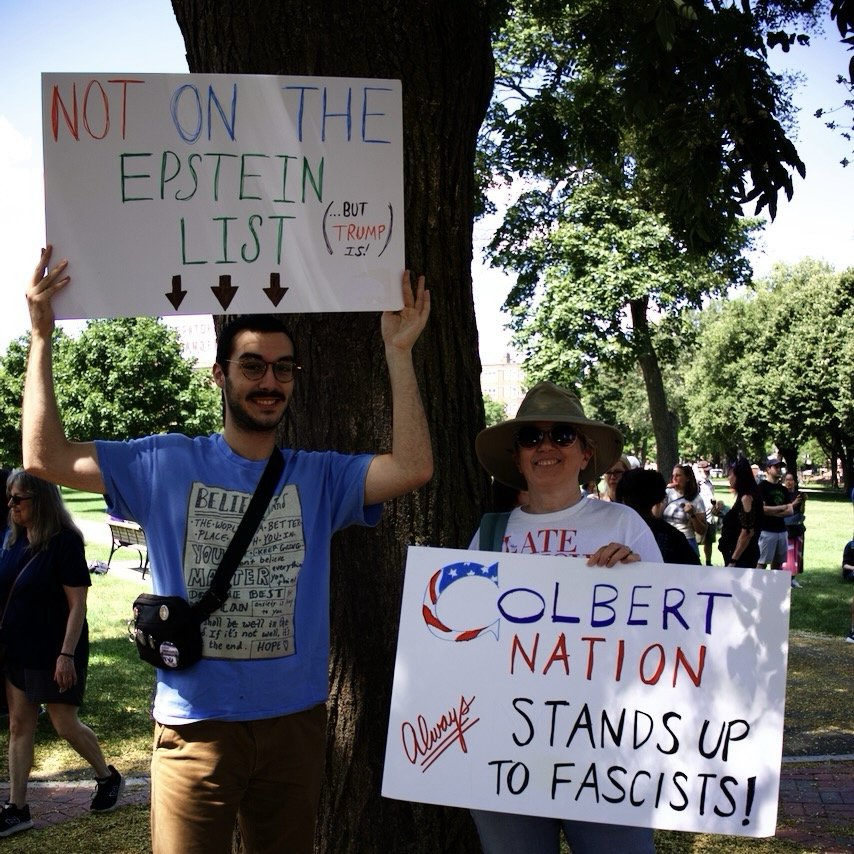
Photo by Mass 50501 volunteer.
Even with this newfound moral confidence, it still took time for me to get comfortable speaking. My next few actions still focused on efforts that boosted the voices of others; namely working safety at events and chronicling the harm caused by the Trump Administration through our Perspectives series. Over time, however, I raised my voice more by writing articles for this blog, though I didn’t stop there. It is a testament to the current situation that this year I entered a Congressional office to demand accountability from my representative, and that you are reading my words now.
Now, my activism is fueled not only by frustration, but also because I feel it is necessary. Adult life has taught me that juggling responsibilities can be challenging, and adding seemingly intractable societal problems to that list is daunting. However, I’ve also recognized that nearly everyone else feels the same way. I’ve noticed that our society is not self-correcting, even different leadership with good intentions could still inadvertently harm many. Because our problems need solutions, but nobody has the time to solve these problems on their own, the only way society can progress is by individuals working collaboratively with the little time they have. It is this way society in a way becomes self-correcting—not through design, like gears on a machine, but through the effort of well-meaning people. The stakes are the only stakes that matter: if the work is not done, people suffer. As someone with some time to contribute, adding my strengths to these efforts has become a duty.
It is for these reasons I have decided to keep fighting to make our country better. Admittedly, I still have hesitations, and part of me wants to return to simply staying informed and voting. If we get to a point where both major political parties in this country respect the ideas I cherish, then I may just do this. However, in the meantime, I will be advocating for my newly held beliefs: If you feel strongly about an issue, take your stance and fight for it if you have the means. It is not necessary to be perfect, just to improve the situation you’re in. Don’t be complacent, and don’t let perfect be the enemy of good.
Enjoyed this article? Get updates on the movement, volunteer opportunities, and more by clicking below.