40 Years of Strides: How Community Action Continues to Shape LGBTQIA+ Health
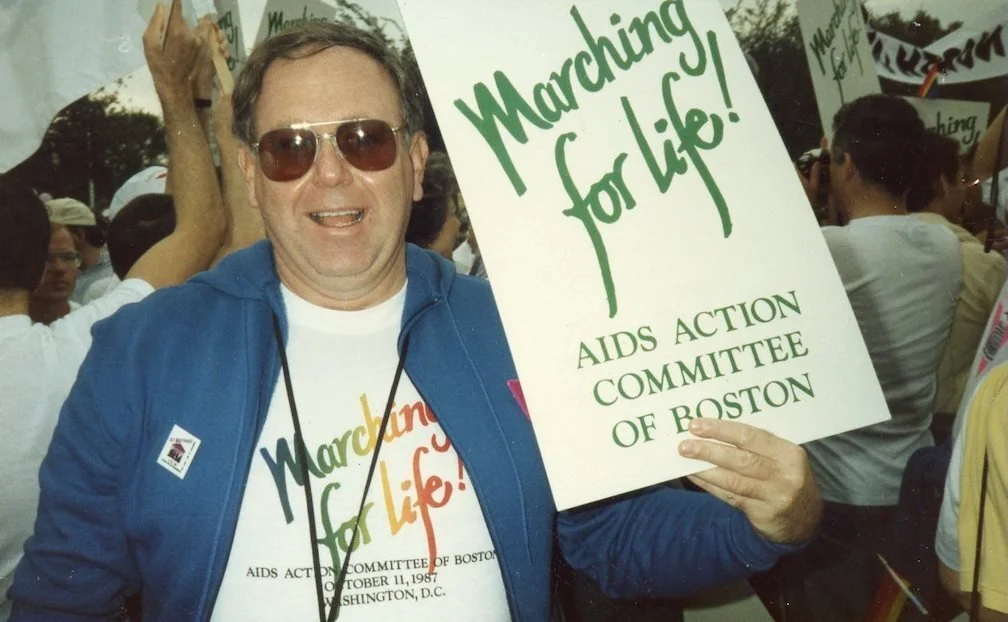
Larry Kessler, one of the original AIDS Action Committee members, at an AIDS Walk protest in Washington, D.C. on October 11, 1987. Photo courtesy of Tom McNaught's collection.
On a late spring morning, Boston Common begins to transform. The city’s oldest public park fills with movement with friends gathering in matching shirts, families pinning on race numbers, longtime advocates greeting one another with hugs that carry decades of shared history. Music hums in the background as a crowd builds, energized by purpose. For some, this is their first time attending. For others, it’s a tradition spanning generations. But for everyone there, Strides for Action is more than a walk or run. It is a living reflection of what happens when a community shows up again and again to care for one another.
This year’s event carries particular meaning. On May 31, 2026, Strides for Action will mark its 40th anniversary on the Boston Common, tracing its roots back to the very first AIDS Walk Boston held on that same date in 1986. Forty years later, the spirit of that original movement endures: grounded in urgency, sustained by compassion, and driven by the belief that healthcare is a right, not a privilege.
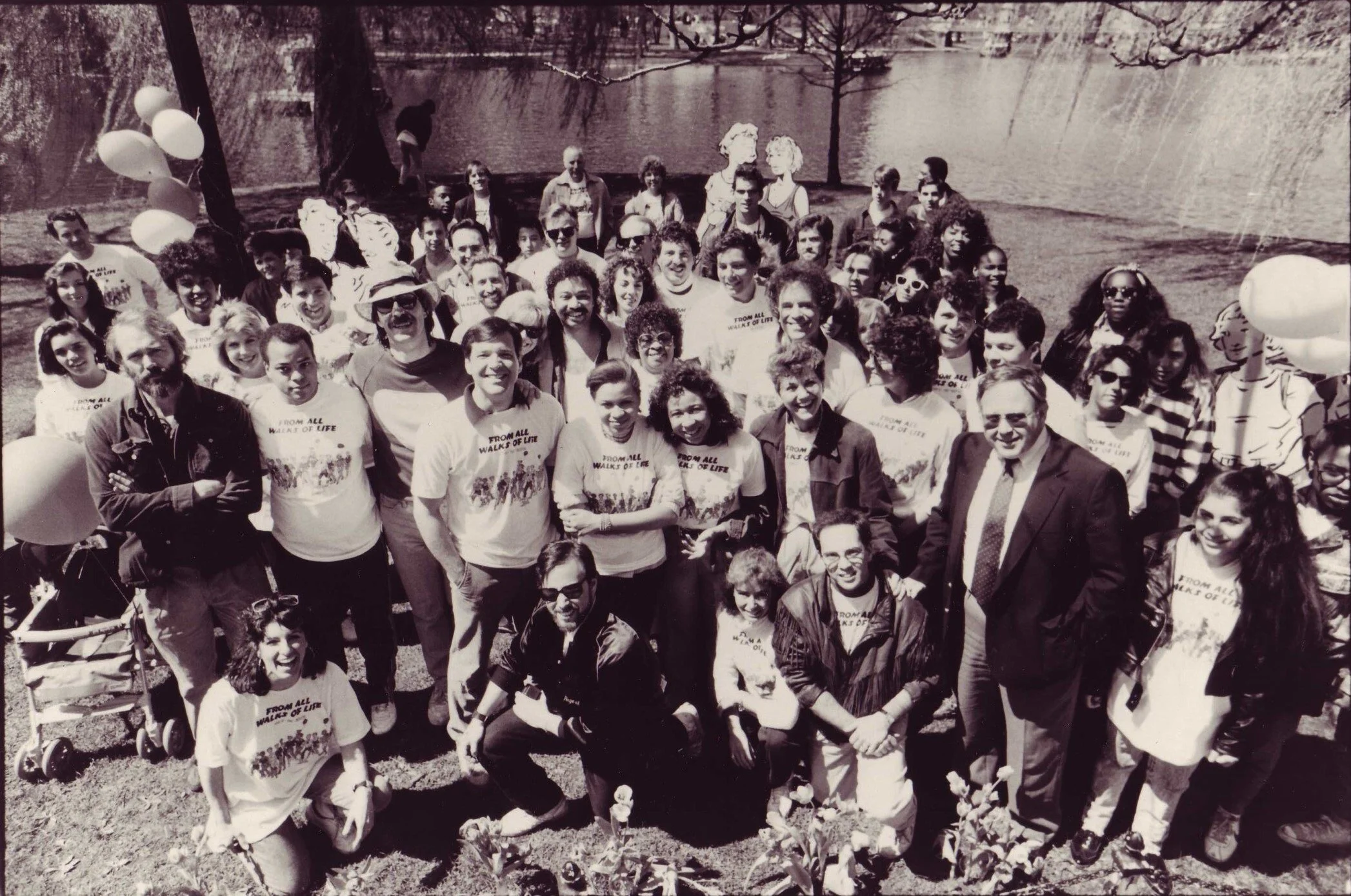
The 1986 AIDS Walk Boston AIDS Action Committee that put on the first "From All Walks of Life" event on May 31, 1986. Photo from the archives of Liz Page, Founder.
A Legacy That Began With Courage
The story of Strides for Action begins long before the first walk. In 1971, Fenway Health was founded as a volunteer-run community clinic, built on a simple but radical idea that healthcare should be accessible to everyone. This founding principle would prove critical in the years to come, as Fenway stepped into one of the most urgent public health crises in modern history. In 1981, Fenway Health diagnosed one of the first cases of AIDS in New England, placing the organization at the forefront of a rapidly unfolding epidemic. At a time when fear, stigma, and misinformation were widespread, and when government response was slow (if not hostile) Fenway became a trusted provider of care and a hub for emerging knowledge.
By 1982, Fenway Board Members launched the AIDS Action Committee, which would grow into a cornerstone of HIV/AIDS advocacy, prevention, and support services across Massachusetts. These early efforts were rooted in necessity, but also in something more enduring: the power of community-led action. That same community would soon channel its energy into a movement that would define decades of advocacy.
On May 31, 1986, thousands gathered for the first AIDS Walk Boston. It was a grassroots demonstration of solidarity and determination that raised both funds and awareness at a critical time. The walk became an annual tradition, uniting people across backgrounds in a shared mission to support those affected by HIV/AIDS and push for progress. Over time, the Walk evolved to reflect both medical advancements and the broader understanding of health equity.
In 2022, the event officially became Strides for Action, expanding its focus to encompass the full spectrum of LGBTQIA+ health and wellness. While HIV/AIDS remains central to its mission, Strides now reflects a more holistic and inclusive vision that recognizes the interconnected nature of health, identity, and access to care.
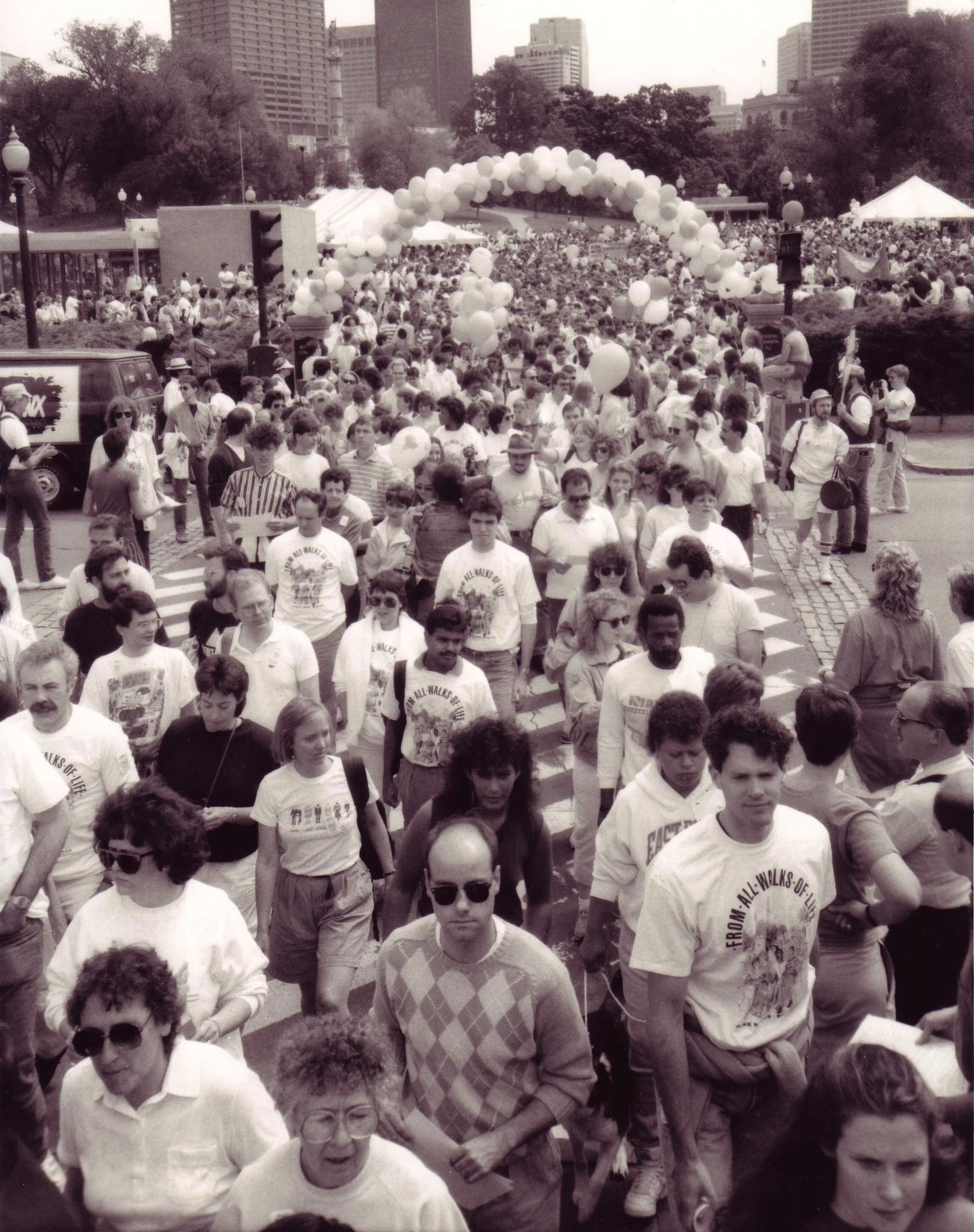
The starting line from the very first "From All Walks of Life" event on May 31, 1986. Photo from the archives of Liz Page, Founder.
Fenway Health Today: A Leader in Inclusive Care
Today, Fenway Health stands as a leader in LGBTQIA+ healthcare, serving tens of thousands of patients each year through an integrated model that combines clinical care, research, education, and policy advocacy. Through The Fenway Institute, its research and policy division, Fenway continues to shape conversations around HIV prevention, transgender health, and health equity on a national and global scale. At the same time, its clinical services remain deeply rooted in community needs by providing affirming, culturally competent care for individuals who have too often been marginalized within traditional healthcare systems. Fenway’s work extends far beyond treatment. It is about creating environments where patients feel seen, respected, and supported, where care is not just available, but truly accessible.
Why the Work Is Not Done
Even with decades of progress, the challenges that gave rise to AIDS Walk Boston, and now Strides for Action, have not disappeared. HIV remains a significant public health issue, both globally and locally. In Massachusetts alone, more than 22,000 people are currently living with HIV/AIDS. Recent data also shows that new HIV diagnoses increased by 34% between 2022 and 2024, underscoring an unsettling trend after years of progress. These numbers tell only part of the story. The burden of HIV is not evenly distributed. Black and Hispanic communities continue to be disproportionately affected by HIV, reflecting longstanding inequities in access to healthcare, prevention tools, and supportive services. In Massachusetts, the prevalence of HIV among Black residents is ten times higher than among white residents, and 6.4 times higher among Hispanic residents. Many new infections in these groups are among people born outside of the United States. Among some groups, disparities are even more severe, particularly for women of color.
These inequities are driven by a complex web of factors—cost of care, stigma, fear of discrimination, and lack of culturally competent services—that create barriers to prevention, testing, and treatment. Even in settings where advanced medical options exist, access is not guaranteed. Daily medications like PrEP have transformed HIV prevention, but adherence can be challenging, particularly for individuals facing unstable housing, economic insecurity, or limited access to consistent care. Luckily, we now have access to injectable PrEP, including twice yearly injections, which will help increase adherence for those who have trouble maintaining a daily pill regimen. Fenway Health was instrumental in researching all of these different types of PrEP and continues to research PrEP’s effectiveness in populations outside the LGBTQIA+ community, including cisgender women. At the same time, stigma continues to discourage many from seeking testing or engaging in treatment even though effective therapies can support long, healthy lives and prevent transmission. In this context, the mission of Strides for Action remains as vital as ever.
What Strides for Action Makes Possible
Every dollar raised and every step taken at Strides for Action helps sustain and expand critical programs at Fenway Health. These include:
HIV prevention, testing, and treatment services that meet individuals where they are, offering both traditional care and innovative approaches to reach underserved populations
Mental health services and community wellness programs, addressing the emotional and psychological dimensions of health
Culturally competent services that ensure LGBTQIA+ individuals receive respectful, informed treatment
Research, education, and policy advocacy through The Fenway Institute, helping to advance equitable healthcare systems nationwide
Together, these efforts form a comprehensive approach to health that recognizes that clinical care alone is not enough. At a time when funding for LGBTQIA+ healthcare services faces increasing uncertainty, support from community-based events like Strides is essential. For many individuals, particularly those navigating intersecting barriers, Fenway Health serves as a lifeline.
A Community in Motion
While the impact of Strides for Action is measurable in programs and funding, its deeper significance lies in the sense of community it fosters. Each year, the event brings together a diverse and intergenerational group of participants. There are long-time advocates who remember the early days of the AIDS crisis, walking alongside younger participants who are continuing the work in new ways. There are families walking in honor of loved ones, corporate teams supporting colleagues, and individuals attending simply because they believe in the cause. The atmosphere reflects something bigger than any one organization or issue. It is a gathering rooted in remembrance and resilience but also in joy and pride.
Strides for Action marks the beginning of Boston’s Pride season, offering a moment to celebrate identity and community while staying grounded in purpose. It reminds us that progress is not inevitable; it must be the result of collective and intentional action.
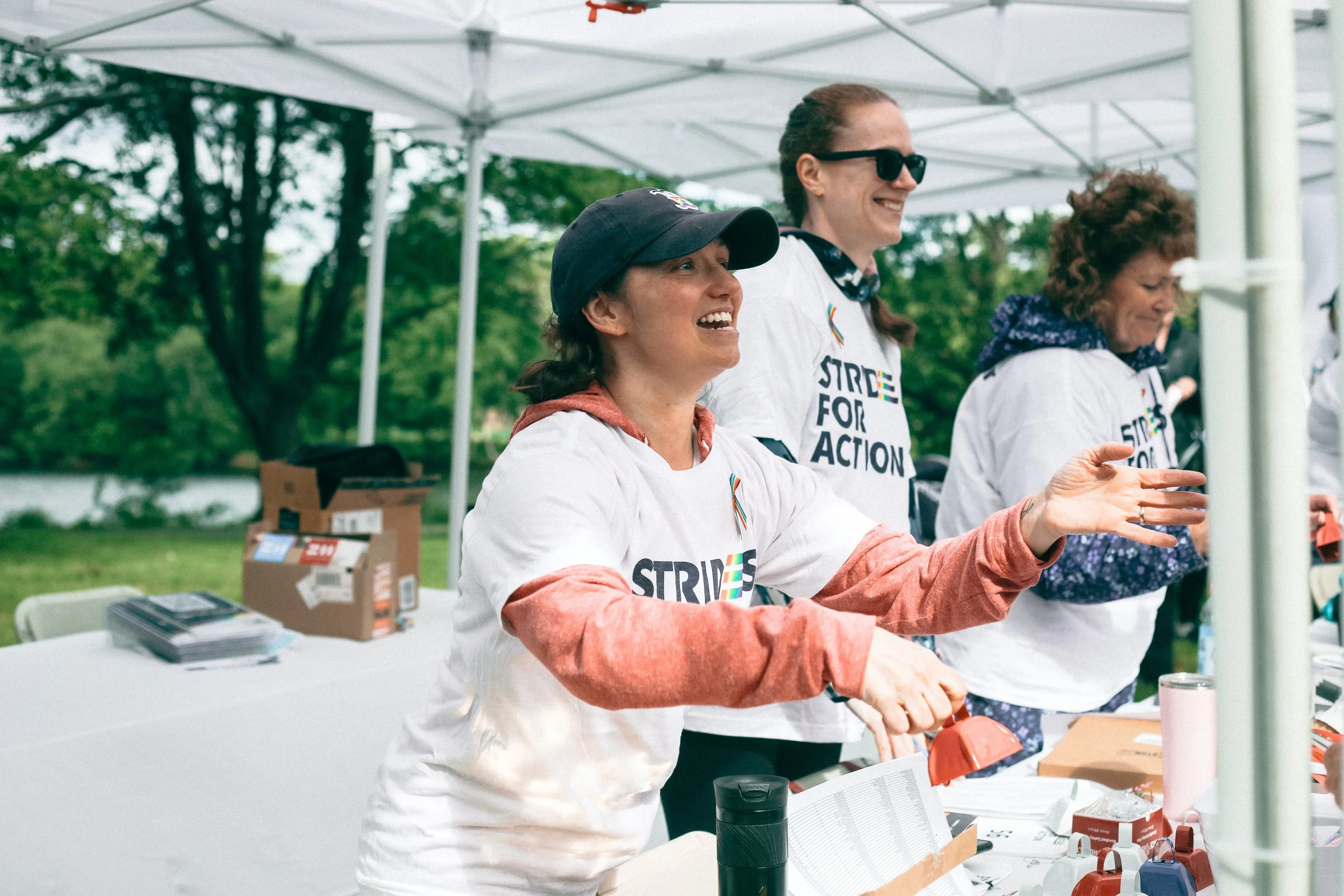
Volunteers from Strides for Action 2025. Photography: Riley Vecchione.
How to Get Involved
One of the most powerful aspects of Strides for Action is its accessibility. There is no single way to participate, only the shared commitment to make a difference. Individuals and groups can:
Register to walk or run on event day for free
Join or create a fundraising team, bringing together friends, family, or colleagues
Make a donation to support Fenway Health’s programs
Volunteer or attend as a supporter
Amplify the event through social media and community networks
Whether contributing time, energy, or resources, every action helps expand the reach and impact of this work. Participation is not about performance; it is about presence.
Looking Forward: The Next 40 Years
As Strides for Action reaches its 40th anniversary, it offers both a moment of reflection and a vision for the future. The past four decades have demonstrated what is possible when communities come together to demand change, build infrastructure, and care for one another. Advances in HIV treatment, increased visibility for LGBTQIA+ health needs, and expanded access to services are all part of that legacy. But the work is far from complete.
The next 40 years will require sustained commitment to addressing systemic inequities, expanding culturally competent care, and ensuring that advancements in medicine translate into real-world access for everyone. It will require continued advocacy, innovation, and collaboration across communities and institutions. Most importantly, it will require people willing to show up.
A Call to Action
This moment calls for action.
To stride against injustice.
To protect access to care.
To stand alongside those most impacted by health inequities.
On May 31, 2026, Boston Common will once again become a place of gathering, movement, and purpose just as it was 40 years ago. Join us! Walk, run, donate, or cheer from the sidelines. However you participate, you become part of a movement that has been changing lives for four decades and will continue shaping the future of healthcare for years to come. Because every step matters. And together, we can make every stride count.
This is a guest article from our friends at Fenway Health. To learn more about their work and to get involved, visit them at fenwayhealth.org.
Enjoyed this article? Get updates on the movement, volunteer opportunities, and more by clicking below.