Flock and the Right to Record in Public
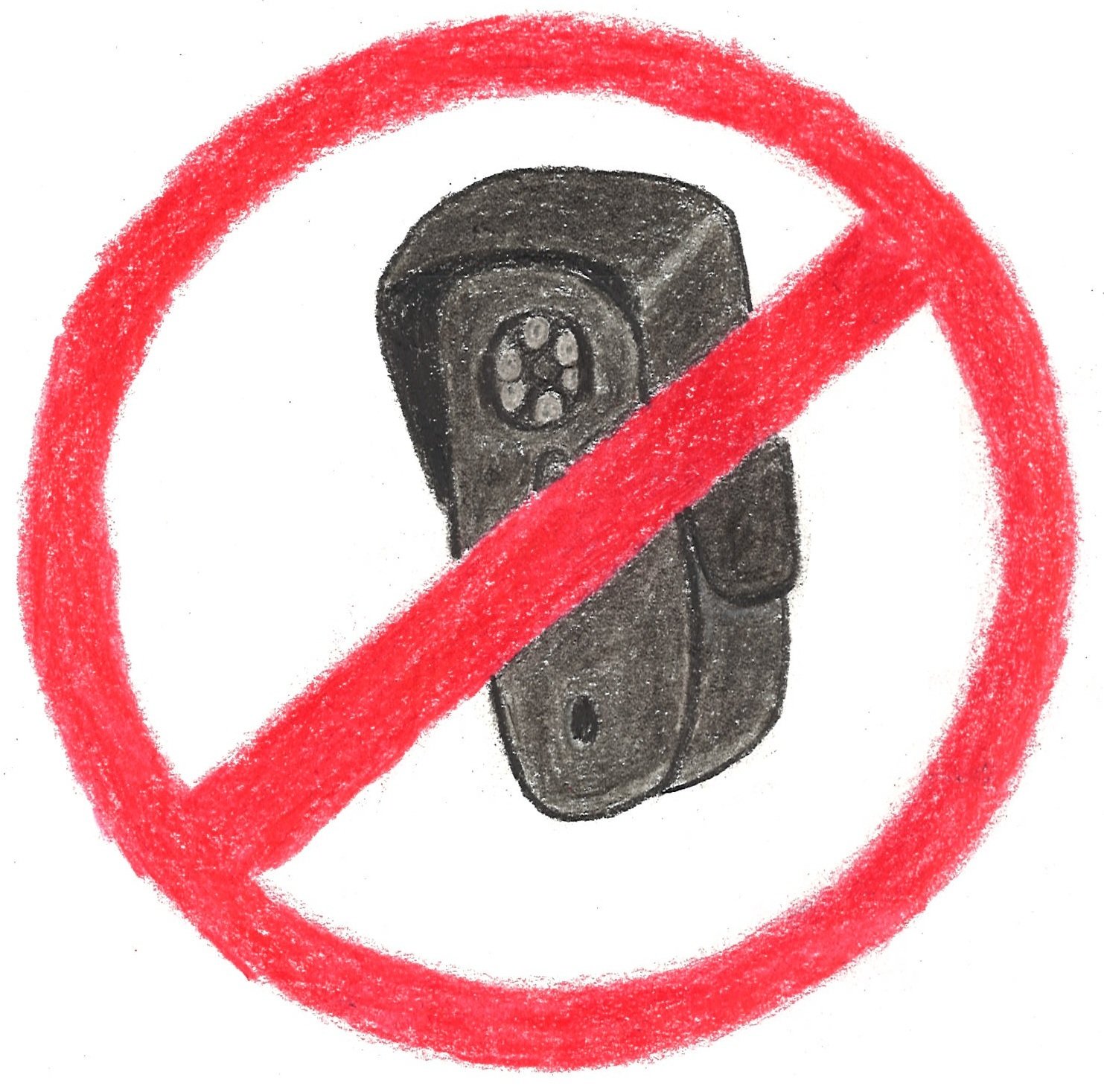
Original Art by Kate F.
We at Mass 50501 have recently started the Flock Off Campaign, a project designed to curtail mass surveillance in Massachusetts by removing AI-powered traffic cameras owned and operated by Flock Safety from our local communities. Since launching this initiative, we have heard some concerns that opposing Flock Safety’s recording also puts citizen’s right to record at risk. In this article we will show that this fear is unfounded since different types of recording have very different places in the law.
First, it must be understood that the ‘right to record’ is not written in the Bill of Rights. After all, recording technology was not yet invented at the time the Constitution was adopted, so the Framers had no reason to explicitly enshrine such a right. However, the First Amendment says, “Congress shall make no law...abridging the freedom of speech, or of the press.” This has frequently been interpreted as protecting recordings, although context still matters. After all, there is a big difference between a journalist recording a public parade, a tourist recording their vacation, and a stalker recording their victim.
Covering every instance of when people do and don’t have the right to record could take up an entire legal textbook, so let’s focus on a context that has come up very frequently under the Trump administration: the right to record government officers while they are enforcing the law. In Massachusetts, the most applicable case law comes from a 2011 ruling from the First Circuit Court of Appeals, in a case known as Glik v. Cunniffe. Similar cases and rules have come out in the Third, Fifth, Seventh, Ninth, and Eleventh Circuits.
This case is about a man, Simon Glik, who used his phone to record police officers arresting someone on the Boston Common, and was arrested for doing so. Several key facts in this case were that Glik was not hiding the fact that he was recording the officers, that the conduct he was recording took place in a public space, and that the officers were acting as agents of the government by performing law enforcement activities when being recorded.
The fact that Glik was open in his recording is vital, because Massachusetts’ wire tapping law (Mass. Gen. Laws ch. 272, § 99(C)(1)) makes it illegal to, “secretly hear, secretly record… the contents of any wire or oral communication through the use of any intercepting device by any person other than a person given prior authority by all parties to such communication.” This law indicates that, for example, if you wanted to record a phone call in Massachusetts, everyone on that call must first consent. However, the word ‘secretly’ in that statue is very important. It was because of that word that the court found, “no probable cause supporting the wiretap charge, because the law requires a secret recording and the officers admitted that Glik had used his cell phone openly and in plain view to obtain the video and audio recording.”
It is also important that Glik was filming in a public space. If he were recording a private space, the owner of that space would have very strong privacy rights which could limit citizens’ right to record. Remember, the First Amendment protects you from the government, not other citizens. In Lloyd Corp., Ltd. v. Tanner (1972), the Supreme Court held that the owners of a mall could prohibit people from handing out fliers inside the mall, even though that same conduct would be allowed on the public sidewalk just outside. The mall owners, as private citizens, could more strongly regulate speech on their property than the government can in public spaces.
It should also be stressed that Glik was recording officers who were acting as law enforcement. This is crucial because there is a public interest in how laws are enforced in the community, and protecting this discussion and dissemination of information, relevant to this interest, is a fundamental First Amendment protection. As the District Court’s opinion states: “Gathering information about government officials in a form that can readily be disseminated to others serves a cardinal First Amendment interest.” In order for the citizens to make informed decisions about their government, it is critical that information about government operations is reliably available.
What many people may find surprising is a detail that was ultimately irrelevant, namely that Glik is not a professional reporter or otherwise part of the institutional press. The court found that, “[i]t is of no significance that the present case… involves a private individual, and not a reporter, gathering information about public officials.” The court goes on to say that, “many of our images of current events come from bystanders with a ready cell phone or digital camera rather than a traditional film crew, and news stories are now just as likely to be broken by a blogger at her computer as a reporter at a major newspaper. Such developments make clear why the news-gathering protections of the First Amendment cannot turn on professional credentials or status.” The right of citizens to record government officers in public is thus well established for every individual.
It is worth noting that while private citizens have strong First Amendment protections, government employees who take actions as employees do not. In the case Garcetti v. Ceballos (2006), the Supreme Court found that a government employee could be fired for a memo he wrote as a part of his job, and the employee could not claim First Amendment protection. The First Amendment does not protect the government from itself.
In contrast to citizen’s right to record, Flock Safety’s automatic license plate readers stand on very shaky legal grounds. For those unaware, Flock Safety is a company creating what it calls a “National License Plate Readers Network” (NLPRN). The goal of this network is to comprehensively record every car on all public roads at all times. Information collected by these cameras is then sold to government officers, including federal officers such as ICE, in order to track the movements of anyone the officers seek to locate. It should be noted that Flock Safety contracts with local municipalities to install their cameras and provide access to the collected data. Flock Safety will then fulfill search requests from officers without requiring a warrant. The NLPRN is paid for by the government for the benefit of the government, meaning Flock Safety cannot claim First Amendment protections since it is acting like a government employee.
Immediately, other differences between Flock Safety’s business model and the right to record we have previously discussed should be evident. While Glik was recording a single event, Flock Safety is attempting to record everything done on public roads. Glik was recording officers performing their duties, something there is a strong public interest in, while Flock Safety wants to record where and how everyone travels, which is not in the public interest. Glik’s recording could have been used to further public discourse by being disseminated in the press, while Flock Safety’s recordings are only provided to officers for law enforcement purposes.
One could argue that these differences exist because Flock Safety is acting to prevent and solve crimes rather than to further public discourse, and is therefore serving a different public interest. I find it highly likely that Flock Safety itself would make this claim, considering its website says, “We provide safety solutions to Law Enforcement, neighborhoods and businesses.” However, this framing means Flock Safety’s recording should not be examined through the lens of First Amendment, but through the Fourth Amendment and its protection against unreasonable search.
The Supreme Court case United States v. Jones (2012) bears a lot of similarities to the Flock Safety situation. In that case, officers of the government attached a GPS tracker to Antoine Jones’ car without a valid warrant and gathered data on the car’s position over 4 weeks. Jones argued that this information should have been suppressed at trial because it was gathered from an unreasonable search, an argument the court unanimously agreed with.
Justice Sotomayor observed that, “GPS monitoring generates a precise, comprehensive record of a person’s public movements that reflects a wealth of detail about her familial, political, professional, religious, and sexual associations,” and that “[t]he Government can store such records and efficiently mine them for information years into the future.” Both of these facts are true regarding the NLPRN, and so I would say that warrantless searches of the NLPRN should be unreasonable just as warrantless collection of GPS data is.
A person may think that the NLPRN is still different because it does not attach anything physical to the car, but, in a concurrence, Justice Alito preempts such objections. He very thoroughly argued, with particular concern for still developing technologies, that even if no physical contact, or “trespass”, is made, violations of the Fourth Amendment can still occur.
There is still one big difference between this case and the NLPRN, namely that the NLPRN is owned by a third-party, Flock Safety, and not by the government itself. That brings us to the case of Carpenter v United States, where officers obtained cell phone location data of Timothy Carpenter without a warrant from a third-party, the cell service provider.
The Third-Party Doctrine says that records owned by a third party are not subject to Fourth Amendment protections when that third party voluntarily shares them with officers. The court found that the Third-Party Doctrine did not apply to this type of cell phone record for two reasons. First, the type of records being considered are important, and the records in this case form a nearly perfect record of any individual's movements. As the court describes it: “It is about a detailed chronicle of a person’s physical presence compiled every day, every moment, over several years.”
Second, the information that cell phones give to cell service providers is not truly “shared” because, “carrying one is indispensable to participation in modern society” and “a cell phone logs a cell-site record by dint of its operation, without any affirmative act on the part of the user beyond powering up.” The NLPRN also forms a perfect record of every individual's movements and leaves no meaningful way to avoid it by those wishing not to be surveilled, so the Third-Party Doctrine should also not apply to its records.
Flock Safety’s NLPRN is analogous to both GPS vehicle tracking and cell phone location data, both of which are protected by the Fourth Amendment. Fundamentally, the Bill of Rights was designed to protect the people from the federal government, whether that is the First Amendment protection of citizens’ right to record officers, or the Fourth Amendment’s protection of citizens’ location data. It is completely antithetical for a company to violate those protections on behalf of the government, under a claim that they are simply recording.
Enjoyed this article? Get updates on the movement, volunteer opportunities, and more by clicking below.